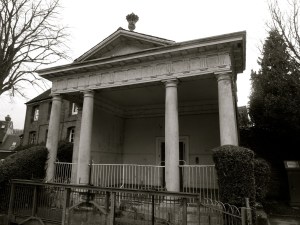
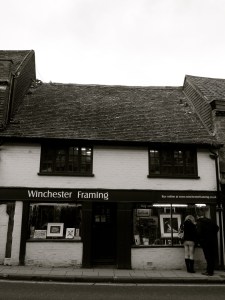
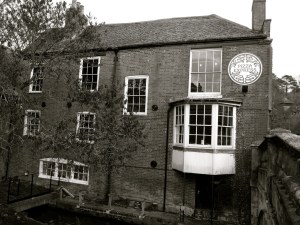
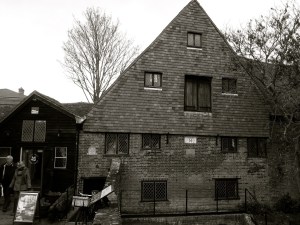
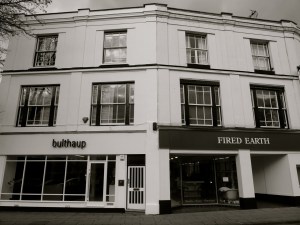
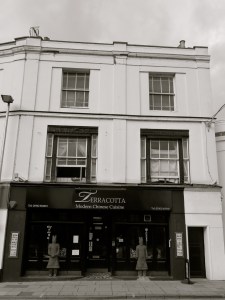
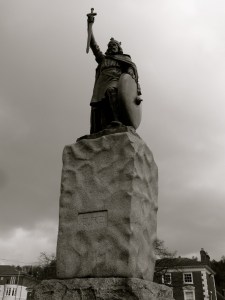
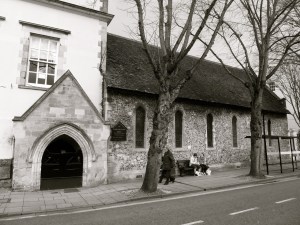
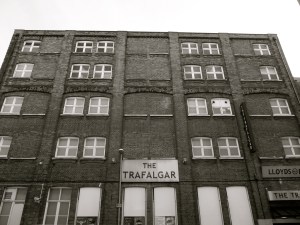
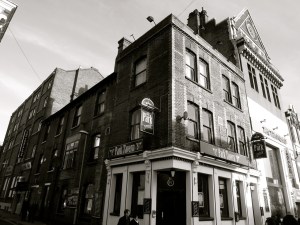
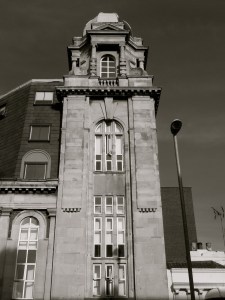
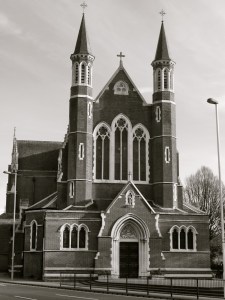
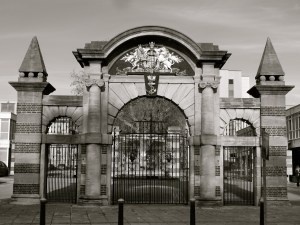
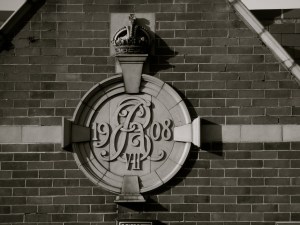
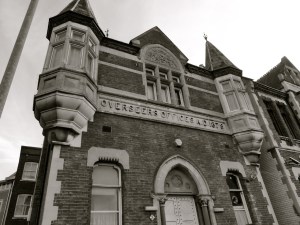
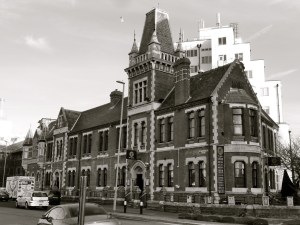
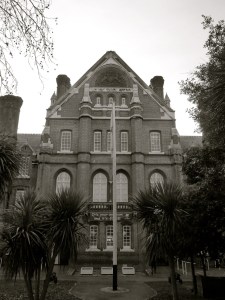
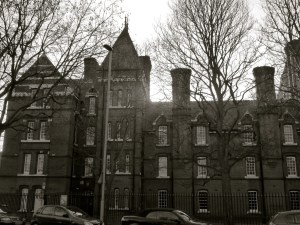
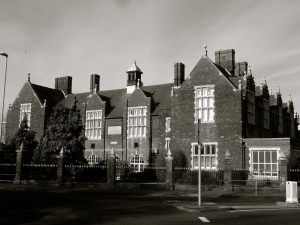
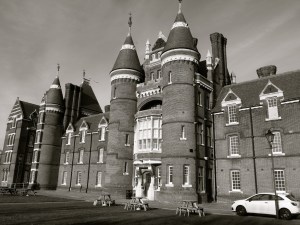
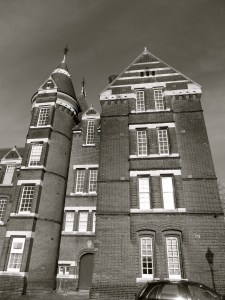
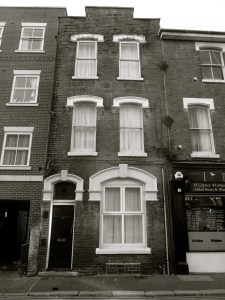
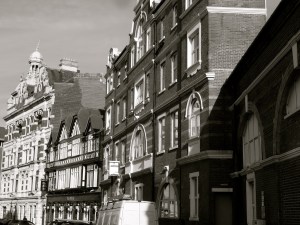
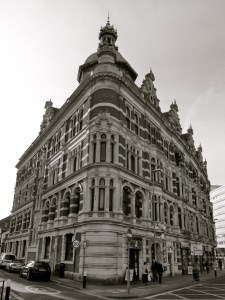
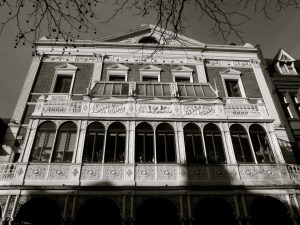
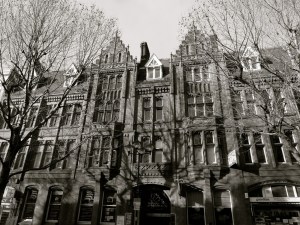
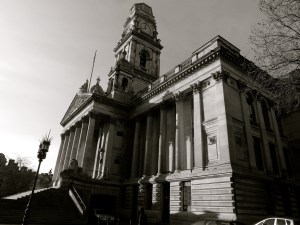
Winchester Architecture – Wales Street / St Johns / Chesil Street Areas (The Soke)

Ther is a suburbe at the est gate of sum caullid the Soken: and is the biggest of al the suburbes longging to the cyte of Winchester.

Minns says:- The Soke, so called from the Saxon soc, which signifies a free domain, the independent jurisdiction of the Bishop with its own Courts and a taxation probably lighter than that within the city.

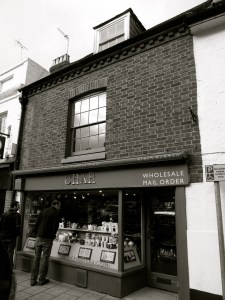
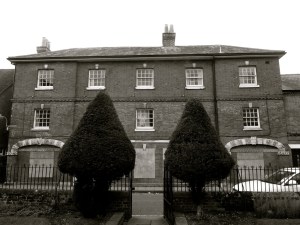
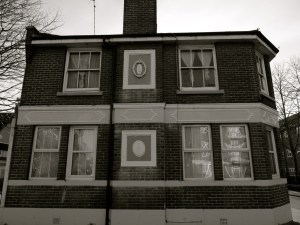
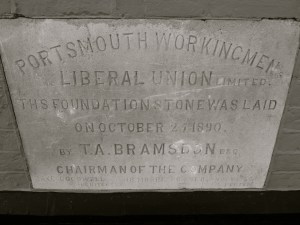
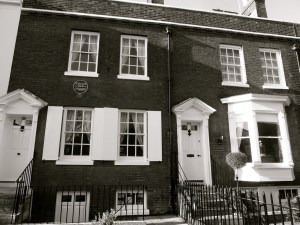
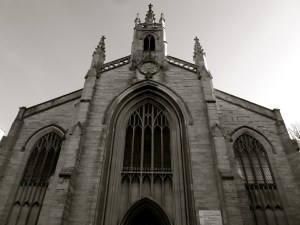
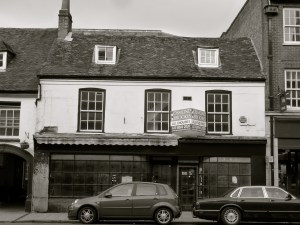
Outside the old East Gate of the city the suburb of ‘The Soke’ was established. This is in the area of Chesil Street and St Johns Street running along the bottom of St Giles Hill. Here are photos I took today of those Listed Buildings, ranging from the C19 to the churches from C12. To the north, at Blue Ball Hill the buildings have a more rural feel, with the C18 workers cottages and the stables at St Johns Croft. Indeed this area feels more like a village than a part of the city, with its own church. Chesil Street runs parallel with the Itchen and is a very busy road, with many of the buildings sooted up, tight to the street. There are some fine C18 town houses here, many with gardens backing onto the river, along with smaller house from C13 on. Further south is the Wharf area with a Black Rat, Black Boy and Black Bridge, around the top of the Itchen Navigation. Favourites this time are 34 Beggars Lane, 21 St Johns Street, Chesil House, and The Black Boy pub. I have put these images before the rest of the gallery below:

This slideshow requires JavaScript.

Winchester Architecture – Broadway / Eastgate St / Colebrook Area

An architectural tour of the Listed Buildings in the Broadway, Eastgate and Colebrook areas of Winchester, in the east of the city. These buildings include The Guildhall, St Johns Chapel, mills, old hospitals, shops and houses, and are mostly from the 18th and 19th Century. I’m not sure how old the statue is. The shops on the north side of Broadway are built upon much older wooden structures. Colebrook St is a quiet, bricky street near the river, with many fine houses surrounding the park. Eastgate street is very busy, with traffic with three impressive terraces. Behind are the almshouses of St Johns, probably the oldest charitable foundation in the UK. In the park is Abbey House, home of the Mayor. My favourite buildings today are No 34 and No 14 Colebrook St, and the unusual curved bays at the beginning of Eastgate St.

Climate Change Deniers ‘Orchestrate intentional and malicious campaign’

He is one of the most vilified men in the highly vilified field of climate science, yet Professor Michael Mann is surprisingly jolly. Despite being the focus of a brutal campaign orchestrated by the fossil-fuel industry and senior politicians within the US Republican Party, Mann’s cheery stoicism is positively infectious.

“I’ve been the focus for attack by those who deny the reality of climate change for so long that it almost seems like forever,” the professor of meteorology at Pennsylvania State University says. “I’m a reluctant public figure, but I have embraced the opportunity to communicate the science.”

Mann became a chief target of the climate change contrarians for being the outspoken author of an iconic graph of global warming science known as the “hockey stick” – the most politicised graph in science, according to the journal Nature.

It was the hockey stick that generated much of the opprobrium heaped upon climate scientists as a result of the “climategate” emails stolen from the University of East Anglia and leaked on to the internet two years ago. Indeed, many of the leaked emails were copies of correspondence between the UEA team in the UK and Mann and his colleagues in the US.

Mann believes the theft of the emails was not the work of a random hacker, but part of a sophisticated campaign. “It was a very successful, well-planned smear campaign intended … to go directly at the trust the public had in scientists,” he insists. “Even though they haven’t solved the crime of who actually broke in, the entire apparatus for propelling this manufactured scandal on to the world stage was completely funded by the fossil-fuel front groups.”

The hockey stick graph appeared to demonstrate how world temperatures had remained fairly steady for several hundred years before shooting up at the end of the 20th century, just like the straight blade jutting out from the shaft of an ice-hockey stick (the analogy doesn’t quite work with a curved field hockey stick).

The original study was published in Nature in 1998. Within five years, Mann had become the focus of an orchestrated campaign to undermine the entire field of climate science by rubbishing the hockey stick – a term coined by a colleague rather than Mann himself. Republican Senator Jim Inhofe picked up the hockey stick to beat climate science, famously declaring in 2003 that “global warming is the greatest hoax ever perpetrated on the American people”.

Mann became the target of Freedom of Information requests and was served with a subpoena by Republican Congressman Joe Barton demanding access to his correspondence. This was followed with a further subpoena from Ken Cuccinelli, the Republican Attorney General of Virginia, and yet more FOI requests from industry front-organisations, notably the American Tradition Institute.

Climate contrarians argued that Mann and his colleagues were concealing their research methods because they had something to hide. In reply, Mann insists that he has been as open as he can about data and methodology, but the aim of these requests has more to do with intimidation than openness. “What they are trying to do is to blur the distinction between private correspondence and scientific data and methods, which of course should be out there for other scientists to attempt to reproduce.

“I think it’s intentional and malicious. It’s intended to chill scientific discourse, to intimidate scientists working in areas that threaten these special interests,” he says. “It’s the icing on the cake if they can also get hold of any more private correspondence that they can mine and cherry pick. It’s a win-win for them.” Why an obscure graph published in a scientific journal should enrage so many people has been the subject of much internet conspiracy (or genuine scientific debate, depending on your point of view).

via Michael Mann: The climate scientist who the deniers have in their sights – Profiles – People – The Independent.

Light on Life by BKS Iyengar – Chapter 3: Vitality – The Energy Body

Selected extracts from the third chapter (Part 1)

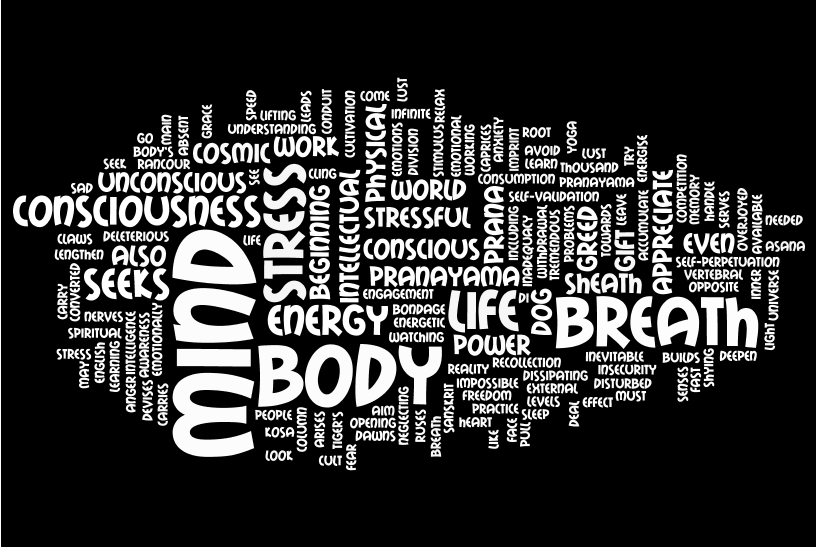
Prana is the energy permeating the universe at all levels. It is physical, mental, intellectual, sexual, spiritual, and cosmic energy.

Prana is special because it carries awareness. It is the vehicle of consciousness.

There is a conduit available directly to cosmic consciousness and intelligence.

By lifting and separating the thirty-three articulations of the vertebral column, and opening the ribs from the spine like tiger’s claws, we deepen and lengthen the breath.

By learning to appreciate breath we learn to appreciate life itself. The gift of breath is the gift of life.

Pranayama is the beginning of withdrawal from the external engagement of the mind and senses. That is why it brings peacefulness.

Introversion in its positive sense, not shying away from the world out of feelings of inadequacy but a desire to explore your inner world. The breath, working in the sheath of the physical body, serves as a bridge between body and mind.

Breath builds up the tremendous power needed to face the infinite light when grace dawns.

Because of this fast life we are neglecting the body and the mind. The body and mind are beginning to pull each other in opposite directions, dissipating our energy.

Life is of itself stressful. People go to the cinema to relax. But even watching the picture is stressful. In sleep there is also stress.

Our aim is to be able to deal with stress as and when it arises, and not to imprint and accumulate it in the body’s systems, including both conscious and unconscious memory.

The main causes of negative stress are anger, fear, speed, greed, unhealthy ambition, and competition, which produce a deleterious effect on the body.

The practice of asana and pranayama not only de-stress you but energise and invigorate the nerves and the mind in order to handle the stress that comes from the caprices of life.

While yoga may begin with the cult of the body, it leads towards the cultivation of our consciousness.

Stress must be dealt with before one can truly meditate.

When you are emotionally disturbed, insecurity and anxiety from the conscious mind is converted into the unconscious mind.

We seek freedom but cling to bondage.

The pranayama kosa, the energetic sheath, is not only where we work with breath but also where we work with our emotions.

Most Westerners try to solve their emotional problems through intellectual understanding.

We carry around within the recollection of mind our rancour, resentments, hates, greed, and lust, even when the motivating stimulus is absent.

Look at your dog. When you leave him he is sad; his heart is on the ground. When you come home, is there resentment? No, he is overjoyed to see you. Are you closer to reality  or is your dog?

The ‘di’ root in Sanskrit is the same as ‘division’ and ‘devil’ in English.

The ego seeks power because it seeks self-perpetuation; it seeks at all costs to avoid its own inevitable demise. To achieve that impossible end, it devises a thousand ruses. … Lust is self-validation through consumption.

City Lights – Charlie Chaplin

Continuing through those films I haven’t seen in the IMDB Top 50, No. 46 is City Lights , released in 1931 as the era of silent movies was coming to an end. 81 years later, I suppose this kind of simple slapstick/mishap humour is a little basic; during it’s day it must have been utterly hilarious and a masterpiece. It’s clear he moves his body wonderfully and the comic timing superb. Overall I found it tedious to watch, and the reedy score grating. However, there were several inspired moments:

Chaplin’s reaction to the gunshot at the millionaire’s, burying his head in the sofa, bum in the air
Slipping around, walking across the dancefloor
Using the soda fountain to put out a fire on a woman’s behind
Eating the party streamer thinking it is spaghetti
Trying to scoop the bald head as party food
Hiding behind the ref in the boxing match
The superb boxing choreography:

Trailer:

Poster:

Just About Everything That is Wrong on Wall Street

The stunning reality is that five years into the financial meltdown, it’s business as usual on Wall Street – outlandish rewards for insiders with downside for almost everyone else. Occupy Wall Street protesters are right – something is wrong – but they’re not sure what. Here’s what I say: A rigged game affects not just the 99 percent, but everyone, and with global repercussions.

For capitalism to work, people who assume risk should reap the rewards of success, but they also must suffer when losses occur.

If you’re unconvinced, let’s revisit the latest debacle – the implosion of yet another Wall Street darling, MF Global. The fallout of its bad bets on European bonds is hitting home hard, even in rural America, where many of its agricultural customers work. As the eighth-largest bankruptcy filing in U.S. history, MF Global represents just about everything that is wrong on Wall Street.

1. The cult of a Wall Street superstar: In 2010, Jon Corzine, the former chairman of Goldman Sachs and former governor of New Jersey, became CEO of MF Global. His goal was to transform the little-known futures broker into a powerhouse investment bank. It took him only 19 months to blow up an institution that dates back to 1793.

2. Gambling disguised as investing: Speculation ruled, once Corzine got going. MF was not after long-term returns but an immediate killing. In the midst of the euro crisis, it made an astonishing $6.3 billion bet on European bonds. But the bonds declined, putting the company’s very existence on the line and taking down its customers too.

3. The bail-me-out syndrome: MF’s management must have thought there was no way it could lose because surely the Europeans would bail out the weaker countries so they wouldn’t default on the bonds. Imagine MF’s shock when the huge bailouts didn’t materialize.

4. Enormous conflicts of interest: The Commodity Futures Trading Commission, chaired by a former Corzine colleague at Goldman Sachs, was supposed to ensure that MF kept customer funds segregated from the firm’s own investments. But apparently, the commission didn’t act when signs of trouble first appeared or start enforcing restrictions until $1.2 billion had vanished from customer accounts.

5. Leverage on a grand scale: Some investment banks scaled back their borrowing after the financial meltdown, but not MF Global. It continued leveraged investments at pre-2008 levels – reportedly at a rate of 40 to 1. Excessive borrowing allowed management to go for the big score, but proved fatal when the markets moved against MF’s bets, requiring more collateral.

6. Failure of regulators and the reform law: Where was the oversight by the Securities and Exchange Commission, the CFTC and FINRA, the largest independent regulator of security firms? Reforms such as the Sarbanes-Oxley and Dodd-Frank protection laws had no effect.

7. Misappropriation of client funds: Investigators want to know how MF tapped clients’ segregated accounts for $1.2 billion to cover its financial losses. After it declared bankruptcy, 33,000 clients found their accounts frozen. How would you like that in today’s volatile markets? Shouldn’t someone do jail time instead of getting a slap-on-the-wrist fine?

8. Worthless rating agencies: Post-meltdown, it’s the same old game – investment firms hire rating agencies to rate their own debt. In August, MF was rated a good investment. Within 60 days, the firm declared bankruptcy.

9. Golden parachutes soaring high: Corzine didn’t risk much of his money on MF stock, but he received lots of stock options. Later, after taking home compensation of $14.25 million in 2010, he voluntarily declined his $12 million golden parachute. Why is he entitled to anything extra for leadership that resulted directly in bankruptcy?

10. Breakdown of morality: Even if something is legal, that doesn’t mean it is right. MF’s management crossed the line for their own potential gain – putting personal interest ahead of protecting shareholders and customers.

Wall Street will keep sucking huge sums out of our economy and putting 100 percent of us at risk unless the rules change. Stiff jail time if you cheat or steal. Whopping personal fines paid by wrongdoers, not their corporations. Fireproof walls that protect customers from a firm’s risky bets. Most important, we must stop gambling and start investing again to build valuable companies. Unless we take back Wall Street and restore true capitalism, we’re living with a time bomb. The next crisis will make 2008 look like a warm-up.

via Wall Street – a raw deal for the 100 percent.

Dear Dad

Dear Dad

I miss you. Where are you? I know you are not coming back, nor can you hear me, but I am going to write. You have a special place in my heart that only Dads can have. And I can’t have any pain in my heart.

What happened to you? I see you in the photos going downhill fast, pretty much from the 80s onward. And by the early 90s you were gone. Gone long before that, I guess. Who was that man I met in the hospital? I didn’t recognize you at first, hobbling towards me, all green and yellow, shaking, old. Then staring up at the horse racing, asking for cigarettes, talking to me like I was all of your sons together. And none of them. Those guys you were with scared the hell out of me. Made no sense, and you little more. That wasn’t where you were meant to be. I heard they didn’t know what else to do with you so there you were, sick and feeble, walking frame, fucked liver making your skin look dead. I couldn’t stay very long. You weren’t really interested in my presence, just that I could get your fags. And I didn’t know what to say. I wish you had recognized me. The doctors said the usual when I expressed guilt at not doing more. That only you can help yourself, and only when you hit rock bottom. That’s a dangerous game. Where was your bottom? I guess you found it.

After that place, with the long corridors and madness and TVs bolted to the walls, I don’t know where you went. The cheap motel? The house with a drunk postman and his drunk father? And what about our dog, did she still get walks and food? I didn’t come to see you again. I was in another county minding my own. I kept your letters. Read them when you really were gone, crying in the corner of the flat, not knowing what to do. I was ready to make moves when it happened. Then cancelled. When there’s a big change like that, I didn’t want another. But it wasn’t unexpected news. I wish I’d come to see you though, no matter how hard it might have been. So the last time wasn’t the special hospital where you didn’t belong. That hug at the gate as I left home, I’ll take that as the last time we saw each other. I wish I’d known you as an adult.

My belly is tight as I write this, thinking of you. I’ll write again soon, to remember, to tell you what I’ve been up to, to tell you what’s happening around here. Shit’s got really crazy. I mean really crazy. We knew it was bad – right? – and you seemed to know something of where it was going. Well, it’s going there for sure. We’re all okay, us boys, and Mum’s in France. There’s this thing called the internet now. No more encyclopaedia volumes, everything on hand. I mean everything. You’d like it. I’m not sure where I’m sending this to, but sending.

Love

Duncan

Vertigo – Alfred Hitchcock

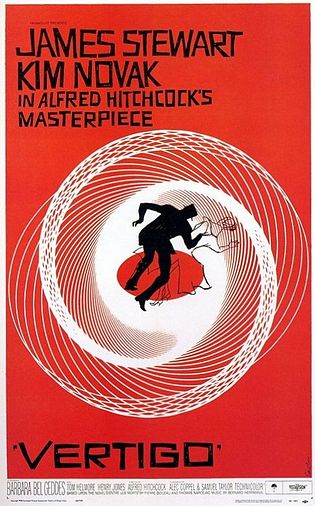
Number 47 of the IMDB top 250 films is Vertigo, directed by Alfred Hitchcock. It features a pervy fifty year old detective suffering from acrophobia, falling obsessively in love with a blonde woman, young enough to be his daughter, whilst ignoring a sweet underwear designer friend who is in love with him. He meets the mysterious woman by using his poor detective skills in following her too closely, having been hired by an acquaintance due to her odd ‘possessed’ behaviour. Only, there is no possession or weirdness, it’s all a scam so that the acquaintance can get his wife’s wealth and run away because he’s a bit bored with life in the shipping industry. Thus the plot twist strips the film of its interestingness. In the opening credits, some gyroscopes can be seen inside a woman’s eye as she tries hard not to blink. The scenes in 1950s San Francisco are a delight and Midge’s apartment seems remarkably fresh and modern. The final scene did give me the willies with its surprise ending, and then I thought the evil looking nun must have something to do with it all. An intrusive score runs through the whole thing.

Poster:

Vertigo Poster

Trailer:

Landport Architecture, Portsmouth

Today I walked around the Landport area of Portsmouth, seeking out those buildings not destroyed in WWII. Landport was a development outside of the original city’s defences and dockyard. Being near to the naval base, it was heavily bombed in the 1940s meaning large areas were cleared of the existing buildings. After the war and into the 1950’s, more buildings were raised in slum clearance ahead of new housing projects in Landport and to the north of the city. The walk took a couple of hours, from Old Commercial Road to the north (with the home place of Charles Dickens) down to the city centre and the terraces east of the University, then past the museum and up the west side of the centre. Here are the photos I took of the architecture, the most unusual being the museum in French Château style.

I didn’t use this beforehand or while walking, but here is a Google map of the listed buildings of Portsmouth.

Russell Brand and Daniel Pinchbeck have a chat under a neon fish in front a pagan altar

In this video, Russell and Daniel talk about consciousness, media, conditioning, drugs, physics, capitalism. Some quotes:

RB: “People have been – beyond trained – coded to not anticipate change, to think that change is implausible, like we’ve had revolution bred out of us.”

RB: “How do we alter the consciousness, the fundamental unifying field? How do we influence change on that level to alter the world?”

DP: “A lot of people who were addicts are people with a strong, innate need to experience non-linear states of consciousness.”

RB: “Consciousness does affect matter. Meditation can affect crime rates.”

“Q: What comes after time?

RB: … We don’t need to know. … We need to align our consciousness with the fundamental frequency from which all life comes and to generate love and unity between us.

Q: But I want to understand.

RB: Then feed and clothe the poor”

DP: “Most people are trapped in only one form of consciousness.”

DP: Capitalism requires more and more things to being turned into money and profit but this has now reached an absurd limit, so the capital system is breaking down. Capitalism is an immature system.”

RB: “The entertainment industry keeps us spellbound, as passive consumers, to negate and castrate our civic duties, to keep us as citizens who don’t participate in our culture but are just independent cells of consumption glutting on life like larve, until we pop.”

RB: “Advertising could be used, instead of telling you if you drink Coke you will feel sexy, telling people that if you meditate you will feel connected to your ultimate destiny as a spiritual being that is only distinguished from the earth by subjectivity incessantly imposed.”

The video includes a very funny segment of Russell crossing Tower Bridge on acid: “There Be Dragons!” Good to see such a mainstream figure involved in these subjects and questions. I hope with the divorce and his further disillusion with ‘fame for the sake of it’ and focussing on comedy roles, he is able to explore and communicate further along these lines.

I couldn’t embed the video on WordPress but here is the link

Paths of Glory – Stanley Kubrick

I am going to watch those films in the IMDB Top 50 I have not seen before.

I started today with Paths of Glory directed by Stanley Kubrick. It’s a 1957 film set in World War I staring Kirk Douglas. It highlights the terror and absurdity of war, and how it can make man stop thinking of people as people but mere statistics for attempted victory. The attempted victory in this case was impossible from the start, the order handed down the chain of command, initiated to impress politicians and the press and accepted for personal glory by the General. The film makes a mockery of systems of authority and the inherent possibility for corruption and saving one’s own face at the expense of others. Of course it is the lowest who are most human and lose the most. I was struck at how little choice there is for questioning or rebellion once in an army or war situation. Some of the acting is a little wooden, as often the case in films of this era, but it is expertly crafted and the dialogue well written. The battle scenes are intense giving a real feel for life in the trenches and the horrors of no-man’s-land. The title comes from a poem by Thomas Gray “Elegy Written in a Country Churchyard”:

“The boast of heraldry, the pomp of pow’r,
And all that beauty, all that wealth e’er gave,
Awaits alike th’inevitable hour.
The paths of glory lead but to the grave.”

Poster:

Incredible POV scene in the trenches, leading to the fateful push:

This is about as ‘action’ as the film gets.

Trailer:

Light on Life by BKS Iyengar – Chapter 2: Stability – Part 2

Chapter 2: Stability – The Physical Body (Asana) – Part 2:

Here are some more extracts and quotes I found valuable in the second part of this chapter:

The mind does not balance when you force.

After reaching the final pose, one has to learn to let go of the effort and tautness of the muscles and shift the load onto the ligaments and joints so that they hold the asana steadily without even the breath causing the body to waver.

Focus on relaxing as you hold the stretch, not clenching, but relaxing and opening. This relaxes the brain as well as the body.

Notice your eyes as well, as you hold the stretch. Tenseness of the eyes also affects the brain. If the eyes are still and silent, the brain is still and passive. The brain can learn only when it begins to relax.

If the asana is done with continual reference to the back of the brain there is a reaction to each action and there is sensitivity. Then life is not only dynamic but is also electrified with life force.

One who knows the art of relaxation also knows also knows the art of meditation.

When an asana is done correctly the body movements are smooth and there is lightness in the body and freedom in the mind. When an asana is felt as heavy it is wrong.

Think of yourself as graceful and expanding however unlikely it may seem at the time.

When we lose this lightness our bodies shrink. The moment the body shrinks the brain becomes heavy and dull, and you see nothing. The doors of perception are closed.

We are seeking the balance of polarity not the antagonism of duality.

When performing asanas no part of the body should be idle, no part should be neglected.

Illustration: Tadasana (Mountain Pose) from Yoga Wisdom and Practice by BKS Iyengar

When the intellect is stable, there is no past, no future, only present.  Do not live in the future; only the present is real.

In asana, we find balance and integration in the three dimensions of space, but we also find balance and integration in the fourth dimension of time.

Many people focus on the past or the future to avoid experiencing the present, often because the present is painful or difficult to endure. In a yoga class, many students think they must simply grit their teeth and bear it until the teacher tells them they can come out of the asana. This is seeing yoga as calisthenics and is the wrong attitude.

It is not that yoga is causing all of this pain; the pain is already there. It is hidden. We just live with it or have learned not to be aware of it.

The goal is to do the asana with as much possible intensity of intelligence and love. To do this, one must learn the difference between “right” pain and “wrong” pain. Right pain is not only constructive but also exhilarating and involves challenge, while wrong pain is destructive and causes excruciating suffering.

If the practice of today damages the practice of tomorrow it is not correct practice.

When we extend and expand our body consciousness beyond its present limitations we are working on the frontier of the known toward the unknown by an intelligent expansion of our awareness.

When everything else is stripped away the essential is revealed.

The test of a philosophy is whether it is applicable now in how you live your life.

An asana is not a posture that can ever be assumed mechanically.

Practitioners of the asanas alone often forget that yoga is for cultivating the head and the heart.

You must purge yourself before finding faults in others. When you see a mistake in someone else try to find if you are making the same mistake.

In asana and pranayama practice we should have the impression we are working on the outer to get closer to the inner reality of our existence.

There is no such thing as a doorway that you can only go through one way. Yes, we are trying to penetrate in, but what is trying to come out to meet us?

The body is the bow, asana the arrow, and soul is the target.

How can you do asana with your soul? We can only do it with the organ of the body that is closest to the soul – the heart.

A Visit from St. Nicholas

This 1823 poem is largely responsible for the conception of Santa Claus from the mid-nineteenth century to today, including his physical appearance, the night of his visit, his mode of transportation, the number and names of his reindeer, as well as the tradition that he brings toys to children

Wiki

A Visit from St. Nicholas

‘Twas the night before Christmas, when all thro’ the house
Not a creature was stirring, not even a mouse;
The stockings were hung by the chimney with care,
In hopes that St. Nicholas soon would be there;
The children were nestled all snug in their beds,
While visions of sugar plums danc’d in their heads,
And Mama in her ‘kerchief, and I in my cap,
Had just settled our brains for a long winter’s nap —
When out on the lawn there arose such a clatter,
I sprang from the bed to see what was the matter.
Away to the window I flew like a flash,
Tore open the shutters, and threw up the sash.
The moon on the breast of the new fallen snow,
Gave the lustre of mid-day to objects below;
When, what to my wondering eyes should appear,
But a miniature sleigh, and eight tiny reindeer,
With a little old driver, so lively and quick,
I knew in a moment it must be St. Nick.
More rapid than eagles his coursers they came,
And he whistled, and shouted, and call’d them by name:
“Now! Dasher, now! Dancer, now! Prancer and Vixen,
“On! Comet, on! Cupid, on! Donder and Blitzen;
“To the top of the porch! To the top of the wall!
“Now dash away! Dash away! Dash away all!”
As dry leaves before the wild hurricane fly,
When they meet with an obstacle, mount to the sky;
So up to the house-top the coursers they flew,
With the sleigh full of toys — and St. Nicholas too:
And then in a twinkling, I heard on the roof
The prancing and pawing of each little hoof.
As I drew in my head, and was turning around,
Down the chimney St. Nicholas came with a bound:
He was dress’d all in fur, from his head to his foot,
And his clothes were all tarnish’d with ashes and soot;
A bundle of toys was flung on his back,
And he look’d like a peddler just opening his pack:
His eyes — how they twinkled! His dimples: how merry,
His cheeks were like roses, his nose like a cherry;
His droll little mouth was drawn up like a bow,
And the beard of his chin was as white as the snow;
The stump of a pipe he held tight in his teeth,
And the smoke it encircled his head like a wreath.
He had a broad face, and a little round belly
That shook when he laugh’d, like a bowl full of jelly:
He was chubby and plump, a right jolly old elf,
And I laugh’d when I saw him in spite of myself;
A wink of his eye and a twist of his head
Soon gave me to know I had nothing to dread.
He spoke not a word, but went straight to his work,
And fill’d all the stockings; then turn’d with a jerk,
And laying his finger aside of his nose
And giving a nod, up the chimney he rose.
He sprung to his sleigh, to his team gave a whistle,
And away they all flew, like the down of a thistle:
But I heard him exclaim, ere he drove out of sight —
Happy Christmas to all, and to all a good night.

—Clement Clark Moore

Another take is that Santa is a Siberian Shaman:

Trends for 2012

1. Economic Martial Law: Given the current economic and geopolitical conditions, the central banks and world governments already have plans in place to declare economic martial law … with the possibility of military martial law to follow.

2. Battlefield America: With a stroke of the Presidential pen, language was removed from an earlier version of the National Defense Authorization Act, granting the President authority to act as judge, jury and executioner. Citizens, welcome to “Battlefield America.”

3. Invasion of the Occtupy: 15 years ago, Gerald Celente predicted in his book Trends 2000 that prolonged protests would hit Wall Street in the early years of the new millennium and would spread nationwide. The “Occtupy” is now upon us, and it is like nothing history has ever witnessed.

4. Climax Time: The financial house of cards is collapsing, and in 2012 many of the long-simmering socioeconomic and geopolitical trends that Celente has accurately forecast will come to a climax. Some will arrive with a big bang and others less dramatically … but no less consequentially. Are you prepared? And what’s next for the world?

5. Technocrat Takeover: “Democracy is Dead; Long Live the Technocrat!” A pair of lightning-quick financial coup d’états in Greece and Italy have installed two unelected figures as head of state. No one yet in the mainstream media is calling this merger of state and corporate powers by its proper name: Fascism, nor are they calling these “technocrats” by their proper name: Bankers! Can a rudderless ship be saved because technocrat is at the helm?

6. Repatriate! Repatriate!: It took a small, but financially and politically powerful group to sell the world on globalization, and it will take a large, committed and coordinated citizens’ movement to “un-sell” it. “Repatriate! Repatriate!” will pit the creative instincts of a multitude of individuals against the repressive monopoly of the multinationals.

7. Secession Obsession: Winds of political change are blowing from Tunisia to Russia and everywhere in between, opening a window of opportunity through which previously unimaginable political options may now be considered: radical decentralization, Internet-based direct democracy, secession, and even the peaceful dissolution of nations, offering the possibility for a new world “disorder.”

8. Safe Havens: As the signs of imminent economic and social collapse become more pronounced, legions of New Millennium survivalists are, or will be, thinking about looking for methods and ways to escape the resulting turmoil. Those “on-trend” have already taken measure to implement Gerald Celente’s 3 G’s: Gold, Guns and a Getaway plan. Where to go? What to do? Top Trends 2012 will guide the way.

9. Big Brother Internet: The coming year will be the beginning of the end of Internet Freedom: A battle between the governments and the people. Governments will propose legislation for a new “authentication technology,” requiring Internet users to present the equivalent of a driver’s license and/or bill of health to navigate cyberspace. For the general population it will represent yet another curtailing of freedom and level of governmental control.

10. Direct vs. Faux Democracy: In every corner of the world, a restive populace has made it clear that it’s disgusted with “politics as usual” and is looking for change. Government, in all its forms – democracy, autocracy, monarchy, socialism, communism – just isn’’t working. The only viable solution is to take the vote out of the hands of party politicians and institute Direct Democracy. If the Swiss can do it, why can’t anyone else?

11. Alternative Energy 2012: Even under the cloud of Fukushima, the harnessing of nuclear power is being reinvigorated by a fuel that is significantly safer than uranium and by the introduction of small, modular, portable reactors that reduce costs and construction time. In addition, there are dozens of projects underway that explore the possibility of creating cleaner, competitively priced liquid fuels distilled from natural sources. Plan to start saying goodbye to conventional liquid fuels!

12. Going Out in Style: In the bleak terrain of 2012 and beyond, “Affordable sophistication” will direct and inspire products, fashion, music, the fine arts and entertainment at all levels. US businesses would be wise to wake up and tap into the dormant desire for old time quality and the America that was.

via Gerald Celente’s Dire Predictions For 2012 | Disinformation.

Russia oil spills wreak devastation

Environmentalists estimate at least 1 percent of Russia’s annual oil production, or 5 million tons, is spilled every year. That is equivalent to one Deepwater Horizon-scale leak about every two months. Crumbling infrastructure and a harsh climate combine to spell disaster in the world’s largest oil producer, responsible for 13 percent of global output.

Oil, stubbornly seeping through rusty pipelines and old wells, contaminates soil, kills all plants that grow on it and destroys habitats for mammals and birds. Half a million tons every year get into rivers that flow into the Arctic Ocean, the government says, upsetting the delicate environmental balance in those waters.

It’s part of a legacy of environmental tragedy that has plagued Russia and the countries of its former Soviet empire for decades, from the nuclear horrors of Chernobyl in Ukraine to lethal chemical waste in the Russian city of Dzerzhinsk and paper mill pollution seeping into Siberia’s Lake Baikal, which holds one-fifth of the world’s supply of fresh water.

Oil spills in Russia are less dramatic than disasters in the Gulf of Mexico or the North Sea, more the result of a drip-drip of leaked crude than a sudden explosion. But they’re more numerous than in any other oil-producing nation including insurgency-hit Nigeria, and combined they spill far more than anywhere else in the world, scientists say.

“Oil and oil products get spilled literally every day,” said Dr. Grigory Barenboim, senior researcher at the Russian Academy of Sciences’ Institute of Water Problems.

via AP Enterprise: Russia oil spills wreak devastation – Boston.com.

Solent Way Video, Stages 2 and 3

Continuing my hike along the Solent Way along the south coast of Hampshire, here are Stages 2 and 3, from Hilsea to Portsmouth Harbour, then yesterday from the Gosport side, along to Lee-on-the-Solent.

Stage 2: From Ports Creek in Hilsea down the east side of Portsea Island through Milton and Eastney to the seafront at Southsea. Then past South Parade pier (looking pretty shoddy these days) along to Clarence Pier and Old Portsmouth, with views of the Isle of Wight. Along the defences, past The Camber and Gunwharf to The Hard:

Stage 3, from the Gosport side of Portsmouth Harbour to Lee on Solent, via Haslar’s Naval Bases and Marina, former hospital and prison, forts Monckton and Gilkicker, Browndown, and the coastline of Stokes Bay at Alverstoke. Apologies for the wind noise – I’m working on a solution. Cotton wool over the mic helps somewhat. Apologies too for the dust into the sun – it’s not on the lens but inside…

Scrap Book: Camping in Combe Martin with Martin

Here we are, Martin and I in Combe Martin north Devon on one of many family camping trips. This is a beautiful stretch of coast, from Ilfracombe along the north of Exmoor. This camp site had an amazing view but back then we were more interested in the rope swing in the woods, even fighting with other camping kids over it. Luckily big Philip Coward was with us to sort it out. I’m rocking the skinny 80s jeans and a Fred Perry, Martin’s rocking the biggest smile.