Aggressive deniers practice a form of asymmetric warfare that is decentralized and largely immune to reasoned response. They launch what Aaron Huertas, a press secretary at the Union of Concerned Scientists, calls “information missiles,” anti-climate-change memes that get passed around on listservs, amplified in the blogosphere, and picked up by radio talk-show hosts or politicians. “Even if they don’t have much money, they are operating in a structure that allows them to punch above their weight,” Huertas says.
…
The evidence to support the theory of anthropogenic, or human-caused, climate change has been mounting since the mid-1950s, when atmospheric models predicted that growing levels of CO2 in the atmosphere would add to the natural “greenhouse effect” and lead to warming. The data was crude at first, and opinions vacillated (skeptics like to recall a 1974 Time cover story that predicted an impending ice age). But by the mid-1990s, thousands of lines of independent inquiry supported the conclusion summarized in the 1995 IPCC report: “The balance of evidence suggests a discernible human influence on global climate.”
Since then, the case for anthropogenic climate change has only strengthened; 98 percent of actively publishing climate scientists now say that it is undeniable. But several finer points remain unsettled. For instance, researchers still don’t completely understand the role of aerosols in the atmosphere, the variable effects of clouds at different heights, and the influence of feedback mechanisms such as the changing reflectivity of the Earth’s surface and the release of gases from permafrost or deep seabeds. Climate-change skeptics have been keen to capitalize on those gaps in knowledge. “They play up smaller debates,” says Francesca Grifo at the Union of Concerned Scientists, “and divert the dialogue by attacking particular aspects. They represent climate science as a house of cards, where you pull out one and it all falls apart.”
…
In March 2001, George W. Bush’s administration declared that climate science was “too uncertain” to justify action (such as ratifying the Kyoto treaty) that might put the brakes on economic growth. That refrain would be echoed again and again, weakening or derailing successive international agreements and domestic policy. How had a small band of non-scientists managed to so quickly and thoroughly pursuade the nation’s leaders to reject an ever more coherent and definitive body of scientific evidence?
…
“It’s that false balance thing,” Mann says. “You’re a reporter and you understand there’s an overwhelming consensus that evidence supports a particular hypothesis—let’s say, the Earth is an oblate spheroid. But you’ve got to get a comment from a holdout at the Flat Earth Society. People see the story and think there’s a serious scientific debate about the shape of the Earth.”
…
“When I get an e-mail that mentions my child and a guillotine,” Hayhoe says, “I sometimes want to pull a blanket over my head. The intent of all this is to discourage scientists. As a woman and a mother, I have to say that sometimes it does achieve its goal. There are many times when I wonder if it’s worth it.”
…
As drivers crawled along Chicago’s busy Eisenhower Expressway, they were confronted with a large billboard that compared believers in global warming with Ted Kaczynski, the Unabomber. The text on the billboard read, “I still believe in global warming. Do you?” The advertisement was meant to be the first in a series. Others would liken climate-science advocates to mass murderers, including Charles Manson and Osama bin Laden. Bast did not respond for comment following the launch of the campaign, but Heartland issued a press release: “The people who believe in man-made global warming are mostly on the radical fringe of society. This is why the most prominent advocates of global warming aren’t scientists. They are murderers, tyrants, and madmen.”
“There are powerful voices of unreason,” says Ben Santer, who led the 1995 IPCC team, “but every year, the science becomes stronger and the data are telling an ever more consistent story.” As with tobacco, the more consistent the scientific story, the more difficult it will become for skeptics to reject anthropogenic climate change. That point was driven home after the Charles Koch Foundation donated $150,000 toward a study by Richard Muller, a physicist at the University of California at Berkeley who was, at the time, a darling of the climate-skeptic community. Muller spent two years investigating claims by global-warming deniers that temperature rises verified by multiple studies were skewed because of flawed analysis, unreliable weather stations and the effect of urban heat islands. Muller and his research team (which included Saul Perlmutter, the joint winner of the 2011 Nobel Prize in Physics) compiled 1.6 billion readings at 39,000 sites and examined other historical data.
Muller’s conclusion was most likely not what the Koch brothers had in mind. Last October, his team announced that the global mean temperature on land had increased by 1.6 degrees since 1950, a result that matched the numbers accepted by the mainstream climate-science community. “The skeptics raised valid points, and everybody should have been a skeptic two years ago,” Muller told me. “Now we have confidence that the temperature rises previously reported had been done without bias. Global warming is real.”
…
Just as in the rest of the country, belief in human-caused climate change in Oklahoma has been rising with the thermometer—according to Krosnick, a large majority of Inhofe’s constituents now believe that anthropogenic global warming is real. I ask Inhofe if he’s noticed any climate changes in his home state, such as last summer’s unprecedented heat and severe drought, withering crops, wild fires and dramatically expanded tornado season. “There’s not been any warming,” he snaps. “And there’s actually been a little bit of cooling. It’s all documented. Look at the Dust Bowl. Back then it was a lot hotter. Matter of fact, now they say the hottest time was actually during that time—1934, I guess.”
Actually, last summer’s average temperature of 86.9˚ was the highest ever recorded in Oklahoma. And last spring’s drought, when hundreds of farmers abandoned livestock they could no longer manage to feed or water, was the worst since 1921.
…
Many of the scientists I’ve spoken with say that no single act of harassment or intimidation has stung more than Inhofe’s “list of 17,” the call for the congressional investigation of prominent climate scientists. Mann, I tell Inhofe, said it “smacked of modern-day McCarthyism.”
120618 Inversions; The egress
All relaxed and floppy after this evening’s Iyengar class in Winchester. At one stage we used our bottoms to prop up a partner’s tummy in half moon (ardha chandrasana). This was a first. I didn’t have much of a tummy to prop up but it still helped get the correct torso rotation to the wall. Then I hoisted a lady’s ample midriff using my bum. This is a great little class with eight regulars that I’ve been attending for over a year. The teacher is Sandy Bell, who is very knowledgable and gives so much guidance, including some fun partner work. The focus tonight was space between the hips and armpits, elongating, opening. It really helps to have a theme for each class, something I’ll look at when teaching again come autumn. I’m really hoping a visiting Iyengar teacher will stay at Brockwood over the summer as she did last year.
Summer… just a couple of days away. Today’s outdoors lunchtime conversation was also about yoga, talking about the benefits of inversions, and ones you can do without putting the neck at risk: down dog, legs up the wall, half shoulder stand, handstand – for example. No, legs up the wall isn’t a true inversion but has many benefits and is supremely relaxing. Some benefits of inversions: Cardiovascular; Mental clarity; Hormonal balance; Blood pressure regulation; Lymphatic drainage; Nervous system health. But lists of benefits aren’t so beneficial – one has to do it.
I’ll leave you with a picture of my fly – why not? THIS WAY TO THE EGRESS –>

120617: The incredibly still mind; Friends’ books; Secrets of Our Living Planet; Absent Fathers Day
This morning in meditation the mind so incredibly still. It’s there from nowhere, suddenly, if suddenly is without time. Previously, deep fluid breathing during morning stretches, continuing into the first part of the meditation.
Then it was back to the office after a week away for the school camp in Devon. Wading through emails, selecting the urgent ones to reply to first. After a while, remembered the Dragon Dictate system I set up before I left, so continued without typing. It’s still an odd experience, speaking to a computer instead of ‘operating’ it with the keyboard. I read yesterday that the new version of OSX, Mountain Lion, will have voice dictation built in. Mid morning we had a staff meeting, with all the foundation team in attendance, discussing the staff changes taking place this year.
The high winds of yesterday subsided leaving a fair and warm day. After lunch I was sat outside in the sun talking with a friend about the correct response, and some of the other responses, to the crisis in the world, ecologically, politically, religiously, seemingly every way. We talked at length about the perhaps-failed environmental movement. We concluded that we don’t know in the slightest what is really going on here, having explored various avenues over the last twenty years. Can this ‘not knowing’ lead to a new action? And how does true communication take place? It’s clear that this century will see huge changes, if not revolution. Saw another friend’s site online this afternoon discussing the overuse of the word ‘revolution’ where in fact it is hardly ever taking place. Both friends are in the process of writing books – The Birth of a River and The Order of Thought.
The Birth of a River:
This is the story of two unlikely companions travelling from Brittany to Britain in search of a mystical river. Armoran, a child of seven, has a special gift, he can communicate with nature like no other. Pursued and vulnerable, he turns to an old lighthouse keeper to help him carry out his mission.
In a world turned increasingly disconnected and destructive, this allegory sets the stage for a contemporary rural renaissance.
Birth of a River is a transforming novel about the wisdom of innocence, learning to listen to nature, and self-discovery.
The Order of Thought:
Why is it that despite all the outward technological advances of our civilisation, over the millennia we human beings have remained essentially brutal and callous, living in confusion, sorrow and fear?
Why is it that the various “solutions” to our pressing global problems — offered often by the “best of minds” — only seem to make matters worse?
Is it really inevitable that our future should just be more of the same — more exploitation, more war, more destruction, more suffering, more ideological conflicts, more disagreements, more confusion, more misunderstandings and power-struggles?
Is there really no way of overcoming the divisions between science and religion, the intellect and the emotions, the individual and the community, one human being and another, the world we inhabit and us?
Or, could it be that the single root of all our troubles we can find right where we are? Could it be that the source of our general incoherence lies within ourselves? Is it possible for our consciousness to change radically — not in some idealistic “New Age” sense, nor based on accumulated knowledge and prescribed dogmatic patterns from the past? Could we make room for creativity and intelligence? Could every one of us really make a difference?
Springwatch may be over (until Summerwatch then Autumnwatch) but this evening on BBC2 Chris Packham’s new series began: Secrets of Our Living Planet. ‘Science is the art of understanding truth and beauty.’ These days all I really want to watch on TV are nature programmes. The world of humans doesn’t interest me so much, at least not in TV form. Such impressive photography and new sights in episode one alone! Here’s some great footage of a variety of hummingbirds:
…
Today is Fathers Day in many countries. My father is no longer alive so today is a day to remember him. I wish he’d found his way, his correct response to the world. Here’s a picture of him with one of my brothers and I:
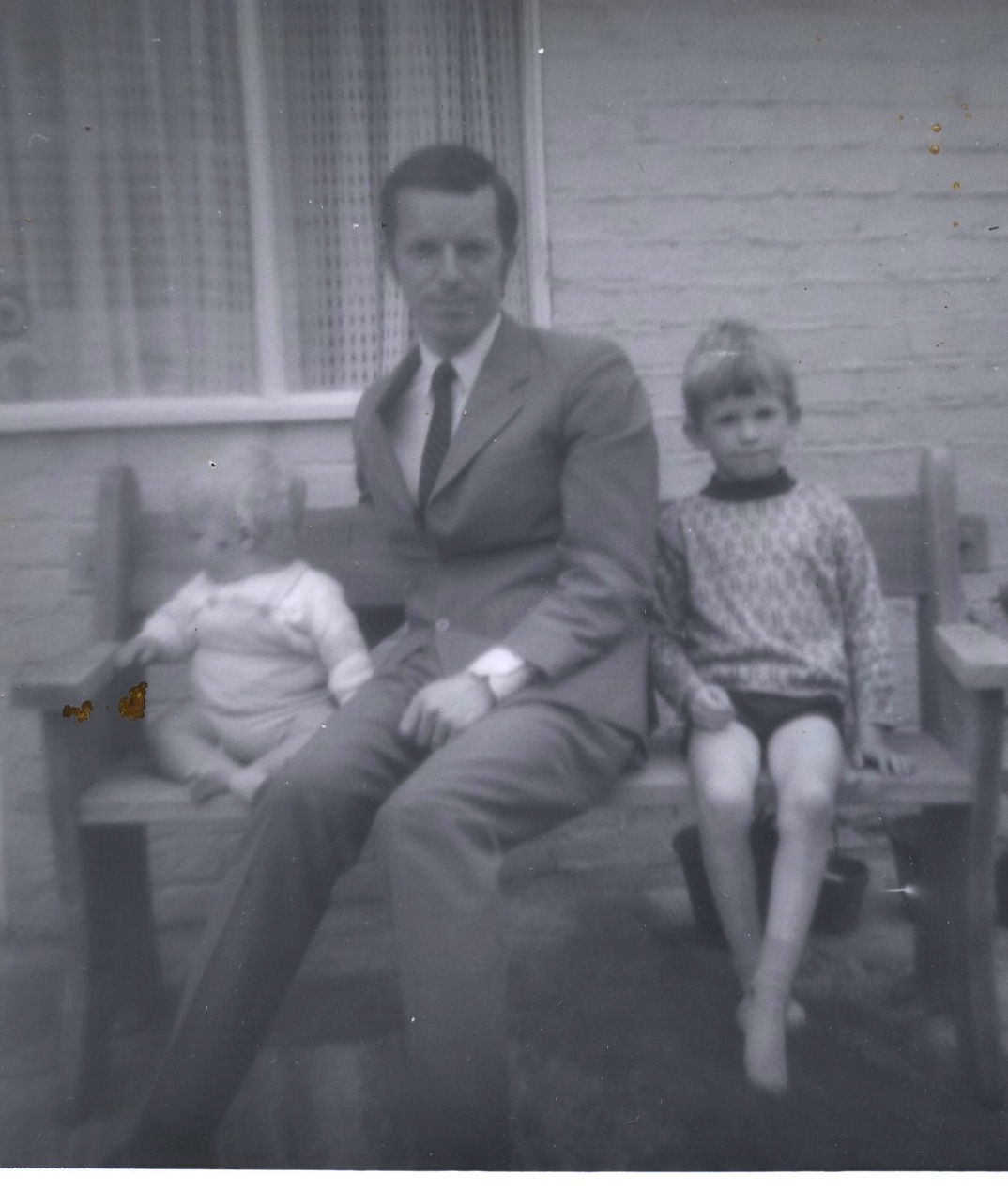
Happy Fathers Day!
120616: The Soloist; Weeding; Pinterest; Death Must Die
A restful day, not moving far from bed. Spent some time this morning and late afternoon weeding or de-grassing the gravel at the side of the path coming into the centre. It has gotten very scruffy over the last year, more noticeable when returning from a trip. Having been living out of doors for much of last week, I was feeling like spending time outside, with something of nature. Such a windy day for June.
Watched the film The Soloist having finished the book yesterday. The story is about a homeless musician who dropped out of a prestigious music school in the 70s and is found by a journalist playing Beethoven on the streets of LA. The most touching aspect for me was the deep friendship between the two men, connecting at a fundamental level away from the typical values of society, and the healing nature of music. Reading the book and watching the movie also got me interested in Skid Row, the homeless capital of America. At the time of the book 90,000 people slept rough each night in Los Angeles, Many with mental health issues. I suppose the numbers have only increased since then. I also read some more about Nathanial Ayres, (who doesn’t look very much like Jamie Foxx, who played the part well). I thought Robert Downey Jr was good as the journalist and author Steve Lopez. As is usually the case, the book was better than the film, honest and unsentimental, without much of the unrealistic drama filmmakers feel the need to insert.
I’ve been posting on Pinterest for the 1st time, with a couple of boards on food and pictures I’ve collected from the Internet that I found funny and had previously posted on my Facebook wall. These can be found here. I suspect the female to male ratio of Pinterest users is very high.
Loosely following the football with a mixture of hatred and fascination. Greece and the Czech Republic are through. I heard the pundits saying quite the opposite just before the matches. What I really don’t like about football is the frequent fouling and trying to get away with it. Also the nationalism is quite ridiculous. The actual game I like watching sometimes, especially with others, although today I didn’t see any of the action. The irony of Greece celebrating a sporting victory whilst their economic woes deepen with a repeat election tomorrow is saddening.
While I was away on camp with the school a book arrived called Death Must Die By Ram Alexander. I ordered it for the KFT archives because of the many references to Krishnamurti. I’ve been skim reading the book for references to K, largely referring to the authors struggle with his teachings. Today I also ordered the Red Book by Sera J Beak, having read a list of recommended new edge books on realitysandwich.com and feeling like reading something a little spicy. The list is mainly of books featuring the use of psychedelics for healing, something I see the potential of but have moved away from, personally, favouring yoga, meditation and diet, with simple living.
I’m experimenting with a gentle type of fasting where one skips every seventh meal. So today I had no breakfast and in two days I’ll have no lunch, and in another two days no supper. The principle is that when one isn’t continuously taking food on board the body has more time for repairing and cleansing.
Light on Life by BKS Iyengar – Chapter 6: Bliss – The Divine Body – Part 1
Selected extracts from the first half of the sixth chapter:
Let us therefore sift through everything, says yoga, every component of a human being that we can find and identify–our bodies, breath, energy, sickness and health, brain and anger, and pride in our power and possessions. Above all, yoga says, let us examine this mysterious “I”, ever present and conscious of itself, but invisible in the mirror or on any photograph.
…
What yoga means by ignorance can perhaps be best translated as nescience, which simply means not knowing. So to Hindus, the archenemy is a state of not knowing. What don’t we know when we are ignorant? The answer is this: you don’t know what is real and what is not real. You don’t know what is enduring and what is perishable. You don’t know who you are and who you are not. Your whole world is upside down because you take the artefacts in your living room to be more real than the unity that connects us all, more real than the relations and obligations that unite us all. Perceiving the links and associations that bind the cosmos in a seamless whole is the object of yoga’s journey of discovery.
…
We are not required simply to adjust our vision, but to turn it inside out as well as outside in, a complete reversal. It means that ultimate truth is inconceivable in normal consciousness.
…
Only a life built on spiritual values (dharma) is based firmly in truth and will stand up to the shocks of life.
…
It is this the egoic “me” that does not want to die. This impersonation of soul by ego is at the base of all human woes, and this is the root of avidya (ignorance).
…
No lovers, servants, riches, cars, houses, or public acclaim can salve the wound of a dysfunctional relationship with our origin. Know your father, said Lord Jesus. By this statement he was directly addressing the problem of not knowing (avidya).
…
We all know the phrase concerning death: you can’t take it with you. This is true. I cannot take my ego beyond the grave, and I certainly can’t take my car, my land, or my bank account.
…
There is nothing wrong with shedding tears for ones we love, but we must know for whom they are shared–for the loss of those who remain and not for those who have departed.
…
We conclude that we must perpetuate ego at all costs, through dynasties, fame, great buildings, and all immortality projects aimed at cheating the grim reaper. What rubbish, says yoga.
…
Look for the light. Ego is not the source of light. Consciousness transmits the divine light of origin, of the soul. But it is like the moon; it reflects the light of the sun. It has no light of its own. Find the sun, says yoga, discover the soul. That is what Hatha Yoga means.
…
Discover what does not die, and the illusion of death is unmasked. That is the conquest of death.
…
We have to keep on questioning ourselves, or else transformation will not take place. Advance with faith, yes, but always call yourself into question. Where there is pride there is always ignorance.
…
Inside the microcosm of the individual exists the macrocosm of the universe.
…
The eyes are the window of the brain, the years are the window of the soul. This is contrary to popular wisdom, but when the senses are withdrawn (pratyahara) this is the true experience.
…
When we can play with the elements within our own bodies, with their own renewal and disproportion and rebalancing, then we are aware of nature at a level that is not apprehend double in the normal way it is supranatural, as normal consciousness is blind to it.

Light on Life by BKS Iyengar – Chapter 5: Wisdom – The Intellectual Body – Part 2
Selected extracts from the second half of the fifth chapter:
This is not yoga by the body for the body, but yoga by the body for the mind, for the intelligence.
…
The intelligence we are now developing depends upon emotional and moral maturity, the ability to value truth and respect ethical conduct, the capacity to feel love in its more universal sense as compassion.
…
The role of awareness is to fill the gaps that inevitably exist between the physical and organic sheaths of our bodies when we practice yoga.
…
The power we generate through yoga practice must become a coherent and indissoluble whole.
…
Energy and awareness act as friends. Where one goes, the other follows. It is by the will of awareness to penetrate that intelligence, is able to move into and occupy the darkest inner recesses of our being.
…
We say intelligence has insight. We should complement that by saying that soul has ‘outsight’; it is a beacon shining out.
…
Considerable achievements also bring in their wake considerable dangers. An obvious one is pride–not satisfaction in a job well done, but a sense of superiority and difference, of distinction and eminence.
…
Yoga is an interior penetration leading to integration of being, senses, breath, mind, intelligence, consciousness, and Self. It is definitely an inward journey, evolution through involution, towards the Soul, which in turn desires to emerge and embrace you in its glory.
…
The pursuit of pleasure through appearances, which I connect here to superficiality of intent, is quite simply the wrong way to go about things. To pursue pleasure is to pursue pain in equal measure. When appearance is more important to us than content we can be sure we have taken the wrong turning.
…
High intelligence brings the gift of power, and we all know that power corrupts. When intelligence is corrupted it brings woe upon ourselves and upon the world.
…
If we live outwardly virtuous lives, it is easy to convince ourselves that there is nothing else wrong with us. Often this is the besetting sin of the puritan or religious fanatic. We often both suppress the truth and suggest the false. Ego aids and abets all flaws of intelligence.
…
Conscience hurts, it causes us pain. We say we are pricked by conscience. … That is because it lies of the paradox of what it means to be a spiritual being living in a physical body in a material world.
…
Paying attention in yogic terms is not concentration. True concentration is an unbroken thread of awareness.
…
In a perfect asana, performed meditatively and with a sustained current of concentration, the self assumes its perfect form, its integrity being beyond reproach. This is asana performed at the sattvic level, where luminosity infuses the whole pose.
…
I am practising asana but at a level where the quality is meditative. The totality of being, from core to skin, is experienced. Mind is unruffled, intelligence is awake in heart rather than in head, self is quiescent, and conscious life is in every cell of the body. That is what I mean when I say asana opens up the whole spectrum of yoga’s possibilities.
…
I have often said that yoga is meditation, and meditation is yoga. Meditation is the stilling of the movements of consciousness. It is bringing the turbulent sea to a state of flat calm. This calm is not torpid or inert. It is a deep tranquillity, pregnant with all the potential of creation.
…
The yogi is journeying from the world of things and events, which are so joyful, painful, baffling, and unending, back to the point of stillness before the waves were ruffled.
…
Do not confuse aloneness with loneliness. Loneliness is separation from the cosmos. Aloneness is to become the common denominator of the cosmic all.
…
Is this the end? Are we there yet? No. There remains the ego, the self, the known self, the impersonator of the soul. He is the last actor to leave the stage. He lingers even for the very final handclap of applause. What forces him off the stage? Silence and retention of the breath.
…
Just as the cessation of the movement of thought brings purity to intelligence, so a motiveless retention effaces ego. What the practitioner eventually experiences is not that at some point he suspends the breath. He is no longer the subject, the agent. The breath breathes him. What this means is that at the highest level of meditation the cosmos breathes you.
…
The unpremeditated retention of breath after exhalation opens the gap in the curtain of time. No past, no future, no sense of passing present. Only presence.
…
The end of duality that comes from meditation is the end of separation and the end of all conflict. The yogi stands one and alone.

Light on Life by BKS Iyengar – Chapter 5: Wisdom – The Intellectual Body – Part 1
Selected extracts from the first half of the fifth chapter:
Our individual intelligence, though an essential rudder to guide us, is merely a puny offshoot of cosmic intelligence, which is the organising system of the universe. This intelligence is everywhere and like air we constantly bathe in it and imbibe it.
…
Intelligence is the operating system of cosmic awareness.
…
You can force a piano up three flights of stairs but you cannot force the febrile human mind to be still. All you can do is train it to be vigilant toward all that disturbs its equilibrium.
…
Memory for past, imagination for future. Squashed between the two, we lose the ability to use direct perception on what really is–i.e. now, the present.
…
‘If it feels good, do it’ is not a maxim to be trusted in the long run. All philosophies recognise that a pleasure seeker will end up as a pain finder. The ancient Greeks said that moderation was the greatest virtue.
…
When awareness is linked to intelligence we are able to see with absolute honesty. When brain and body are moving in harmony there is integrity.
…
A cleansed memory is one that does not contain undigested emotions from the unconscious but that deals with feelings in the present as they arise.
…
If one feels heavy and dull after sleep then that sleep has been tamasic. Disturbed, agitated sleep is rajasic. Sleep that brings lightness, brightness, and freshness is sattvic.
…
Peaceful deep sleep, experienced while alert and awake, is samadhi. When the mind is controlled and still, what remains is the soul. The absence of ego in the state of sleep is akin to samadhi, but it is dull and without awareness. Samadhi is the egolessness of sleep combined with the vibrancy of intelligence.
…
If we feed our minds on violent images, thoughts, and words, our unconscious will regurgitate them in disturbed dreams. Just as right imagination opens the creative mind, right sleep exhilarates the mind and brings alertness.
…
Often as students do savasana or attempt meditation they drift into an agreeable torpor, as if they were swaddled in cotton wool. This is not the prelude to samadhi but to sleep.
…
Good sleep makes consciousness brilliant. Poor sleep leaves it tarnished.
…
We say, “If only I’d known then what I know now.” But what we know now does not seem to stop this from making more mistakes. The yogic blueprint says that right knowledge and erroneous knowledge are two modifications, or states, of consciousness. By the practice of yoga we can lessen and eradicate misperception and wrong knowledge and again accurate perception and right knowledge.
…
An opinion is yesterday’s right or wrong knowledge warmed up and re-served for today’s situation. So opinions are rooted in the past and our examination of memory has shown us that the past can be a minefield.
…
When what is wrong is discarded what is left must be correct. As intelligence expands in consciousness then ego and mind contract to their proper proportions. They no longer rule the roost but serve intelligence.
…
We are seeking to cultivate wisdom, to transform mental dexterity or cleverness, which all people possess in some degree, into the penetrating clear light of wisdom.

Mike D and Ad-Rock on MCA
Or I should say Michael Diamond and Adam Horovitz on Adam Yauch…
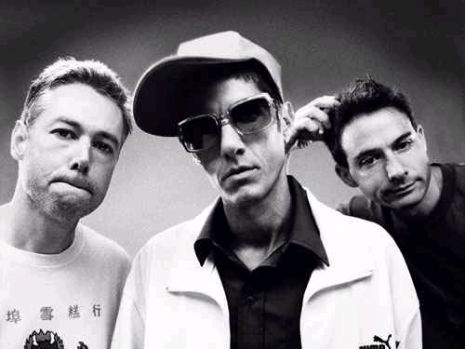
Mike D:
“He had us fooled in the most beautiful way,” Michael Diamond said of Adam Yauch, his friend and fellow Beastie Boy for more than 30 years, describing the latter’s “incredible optimism” during his three-year battle with cancer. “I believed, up to last week, that Adam was somehow coming back,” Diamond confessed, in a long, frank interview after Yauch’s death on May 4th. “But I wouldn’t trade that optimism for anything,” he added quickly, sitting in the kitchen of his Brooklyn home, only six blocks from the house where Yauch grew up. “Because the other option is no fun.”
Did Yauch always have a fighter’s spirit?
He had this tenacity and faith before he discovered Buddhism. His mom said that was already there. No matter how straight-up nuts an idea was, he had the ability to follow through on things he believed in. Like the cover of Paul’s Boutique: “A 360-degree photo? You can’t have a camera spin around.” He researched it and found one. It was an innate thing for him.As a rapper, Yauch had a unique, raspy baritone. He sounded more like a soul singer.
Even when we were doing our first hip-hop records, when we were 19 and 20, he sounded like a gruff 40-year-old. He was the Bobby Womack of rap.Yauch was a gifted MC. It was his flow on things, rather than specific lyrics, that first blew Adam [Horovitz] and I away. Early on, we were in the studio, amazed by how Yauch made it seem so effortless. Horovitz and I were maybe a little jealous. And Rick [Rubin] said to me, “No, this is good. This is where Yauch is at. You sound like you’re working hard. You’re the working rapper. [Laughs] I’m still not sure what to take away from that.
What were your first impressions of Yauch when you met as teenagers?
Adam taught me the ropes – how to make my own [punk-band] badges, how to fake [hand] stamps to get into shows. And after he, [original Beastie Boys guitarist] John Barry and I saw Black Flag at the Peppermint Lounge, Yauch said, “We’re starting a band, and you two guys are in it.” It was the same energy that enabled him to start his film company, Oscilloscope – the ability to will something to happen.What’s an example of that on Licensed to Ill?
We were playing around with this 808 drum machine. We had this beat, and Yauch said, “I’d like to hear what it would sound like backwards.” Run from Run-D.M.C. was there, and he was like, “Man, this is crazy.” But Yauch recorded this beat, bounced it to another tape, flipped it around – this is pre-digital sampling – and bounced it back to the multi-track tape. The reversed beat basically became “Paul Revere.” Yauch saw this thing we couldn’t see – and he killed it.He talked about experimenting with acid during the time of Paul’s Boutique.
Yauch was starting this inward mind journey. We were layering a lot of samples on top of each other, and Yauch was definitely pushing that. The acid experience gave him the ability to see, “Wow, this is great – press ‘play’ on everything at the same time.” Yauch was great at lacking fear.Did his personality change after he became a Buddhist?
He abandoned the band for months in the winter to go snowboarding, on this very serious level. Then it wasn’t snowboarding. He would disappear for two months of teaching by his Holiness the Dalai Lama in Dharamsala. He gradually incorporated that into the music. He was the first to realize we had this soapbox, and we needed to do something with it.But he was never dogmatic about it. He’d say, “You should see these monks. They love playing practical jokes on each other.” When we were smashing cars in the “Sabotage” video, it was the same thing. We just did it with mustaches and wigs.
How much music did you make at your final recording session with him last fall?
Adam instigated it. It could only come from him, in terms of where he was at with treatment. It was stuff we had written or demo-ed, and there were new ideas. He wasn’t sure he was able to do vocals. But after a bit, we ended up doing them. And he was fine. It was a way for him to say, “Yeah, I’m doing it.”Can you imagine making music without him?
I can see making music. I don’t know about a band format. But Yauch would genuinely want us to try whatever crazy thing we wanted but never got around to.
Ad-Rock:
“I’m totally numb,” Adam Horovitz of the Beastie Boys said bluntly, in his only interview following the death on May 4th of his bandmate Adam Yauch. Sitting in the New York office of the Beasties’ publicist, only 10 days after Yauch’s passing, Horovitz fondly recalled their lifetime together in punk, hip-hop and hijinks. He also struggled to describe his feelings after his friend’s death and admitted that healing was slow in coming. “My wife is like, ‘I want to make sure you’re getting it out.’ But then I’m walking the dog and I’ll start crying on the street.” Horovitz shook his head wearily. “It’s pretty fucking crazy.”
Yauch was the oldest of the Beastie Boys. Was he a leader in the early days?
Yauch was in charge. He was smarter, more organized. In a group of friends, you all come up with stupid shit to do. But you never do it. With Yauch, it got done. He had that extra drive to see things through. We each had our roles. One of his was the make-it-happen person.I’d be like, “We should take these pictures where we’re dressed as undercover cops. That would be funny.” But Adam was really into movies. So we made a whole video of that [“Sabotage”]. It wasn’t just a nice picture for us to have.
What was Yauch’s musical role in the Beastie Boys?
He was a really good bass player. He loved Daryl [Jennifer] of the Bad Brains. And he could sound like that. When we met [producer-musician] Mark Nishita, he and Adam would talk all this musical shit: “You should go up a fifth here.” I’d be like, “Tell me where to put my fingers, and I’ll play that for four minutes.”Adam was the Techno Wiz – that’s what me, Mike and Rick [Rubin] called him. I went to his apartment in Brooklyn once. He had a reel-to-reel tape recorder, and he had strung the tape all over the place – through the kitchen, around chairs. He was cutting up this Led Zeppelin beat, playing it over and over. I was like, “How did you figure that out?” He said, “I heard Sly Stone did that.”
How did you and Mike write with Yauch? Who did what?
When the shit hit the fan, after Licensed to Ill, we started having arguments: “I wrote 37 percent of this song.” “These 16 lines are mine.” We decided none of that mattered. From that day on, everything was split three ways. Whatever it was, whoever did what, we all got the credit. Except we had veto power. If you really hated something, you could be, “That can’t happen.”Did you ever veto a Yauch idea?
He wanted the cover of Ill Communication to be this tree painting. It’s actually on the inside [of the CD booklet]. I said, “Anything is better than that tree.” He called veto on Mike and me when we did [2007’s] The Mix-Up. He said, “It has to be instrumental.” We were like, “Let’s try some vocals.” “No, it has to be instrumental.”Can you recall a killer song or verbal lick Yauch wrote that just knocked you out?
When we were in Los Angeles, doing Paul’s Boutique, he got this crazy apartment in Koreatown. And he made “A Year and a Day.” What happened to the three of us together and all that crap? But I heard that track, and it was some heavy shit. He rapped his ass off. Adam bought a jet pilot’s helmet, rigged it with a microphone and recorded the song wearing that helmet.How did you deal with the change in his writing, after he became a Buddhist?
His lyrics became simple ideas about love and non-violence. It was a struggle for Adam to write those things. Basic feelings come off as very Hallmark. But we went through that change together. I wrote the lyrics for the song “Gratitude” [on Check Your Head], and Adam was like, “I really like that.” It made me happy and proud that I had made him happy.What was your reaction when he told you he had cancer?
He said, “I’m gonna be okay.” He’s been right about most shit so far. So I believe him. You would get swept up in his excitement and positivity. We recorded a few months ago. It wasn’t any different from before. We spent more time making fart jokes and ordering food, which was true to form. That’s why it always took so long for us to put records out.Did the comfort he took in Buddhism help you deal with his illness and passing?
I don’t believe Adam was afraid. Bummed out, yeah. But I can’t think when I ever saw him afraid. We got jumped in Brooklyn one time, so we’ve been afraid in that sense. But, man, he hadn’t been afraid in a long time. That gives me peace.
Source: http://www.rollingstone.com/music/news/beastie-boys-adam-horovitz-opens-up-about-adam-yauch-he-was-in-charge-20120523#ixzz1viV6cWAv
Brockwood Park School Pavilions Project – Update May 2012


Brockwood Park School Pavilions Project, a set on Flickr.
With the recent visit of International Trustees, I was able to enter the site for the first time since January. The roof tiles and weatherboards are being put in place and all the of insulation has been pumped in. Wet paper pulp for the walls. A change to the original design are several mezzanine platforms for spare beds and home workspace.
The Vyne, Basingstoke


The Vyne, a set on Flickr.
Photos of the interior and exterior of The Vyne, a National Trust Property near Basingstoke in Hampshire. There are many statues inside, and some freaky paintings. It was a relief to get outside away from the oppressive panelled rooms and into the grounds and woodland. I did like the Staircase Hall and the surprisingly simple bedrooms
Sad Bad News About The Sharks

Weekend Walk 36 – Hamble to Southampton – Solent Way
The 5th stage of the Solent way, east to west. Around 6 miles, from the Warsash ferry at Hamble to the Hythe Ferry at Town Quay Southampton. The path leads from Hamble-le-Rice village, south to the common to pick up Southampton Water shoreline, then past Hamble oil terminal to Netley with its ruined Abbey and Victoria Country Park, then to Weston Shore, entering Southampton at Woolston, the aircraft and shipyards long gone, replaced with Centenary Quay. The across the huge expanse of 1977’s Itchen Bridge and through part of Southampton old town, with some walls and fortifications remaining.
The oil terminal at Hamble collects oil piped in from the field at Wareham in Dorset, 50 miles away, averaging 2-3 million gallons per day.
Much of Howard’s Way was filmed in Hamble. I quite like the theme tune:
I’ve walked this area in another video early on in my series of filmed hikes. More on Victoria Park here
The first webcam

The first webcam, local in 1991, on the internet in 1993, was of a coffee pot at Cambridge University, so that programmers didn’t need to get up to see if there was any coffee.
A Graphic Biography of Hunter S. Thompson
Good as art, poor as a biography is what I read about this graphic novel on the life of Hunter S Thompson. I like Mark Frauenfelder’s description of the book/Thompson:
…about a passionate, rebellious genius who sprinted too fast at the beginning of a long-distance race, collapsed early, and spent his remaining decades burnt-out, crawling bewilderedly.
and:
Thompson could have been the “heavyweight champion of American letters,” but his self-destructive behavior, which got worse with each passing year, ruined that opportunity.
Video preview:
I always think the Dalai Lama and Hunter S Thompson look similar. Opposite sides of a two-headed coin?
Mr Lama:

Mr Thompson:

The old green tree


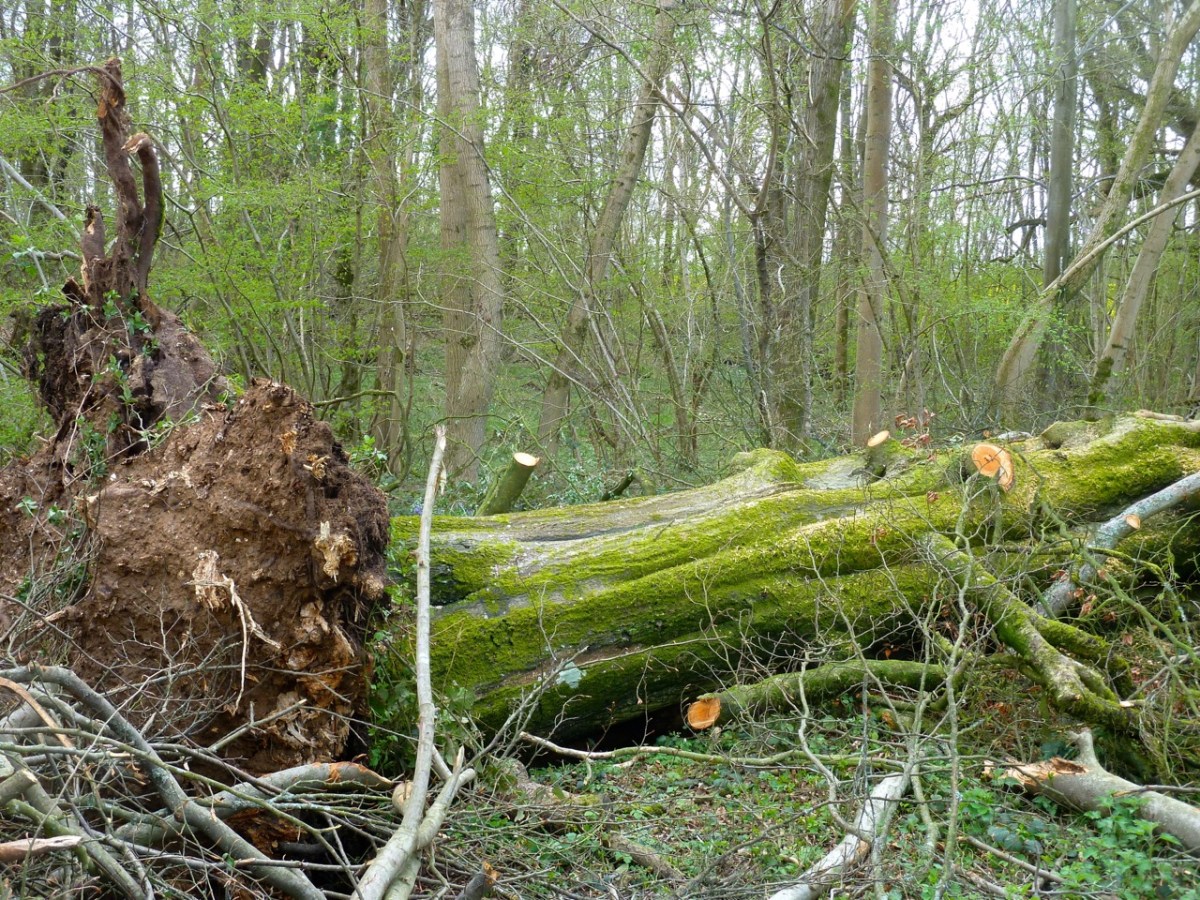
Washington c.1863

Voices from the “Wild North”: Fracking in North Dakota
Williston, Watford City, New Town, Sidney, Montana and a handful of towns like them are located near the epicenter of the Bakken formation, a subsurface geologic strata thought to contain between 4 billion and 24 billion barrels of recoverable oil. Discovered in 1951, this potential windfall has been sitting for half a century like dinosaurs’ blood beneath a thick layer of marine shale, waiting for the magic bullet to arrive that could liberate it. That bullet finally appeared in the form of horizontal drilling and hydraulic fracturing technology – fracking – a controversial form of water-intensive high-pressure drilling that requires an average of a million and a quarter gallons of fluid per well and incorporates numerous toxic chemicals at potentially dangerous levels that critics claim can permeate the water table. About 1,800 wells are being added a year along the formation, with much of the oil sitting in tanks while crews lay track from the Burlington Northern Santa Fe Railroad, and hundreds of empty flat-black tank cars sit gleaming in the attenuated daylight.
…
“It’s like every other boom that’s happened since the Gold Rush,” says Sara. “It brings out the assholes of the earth.”
“Still, this place is something to see,” adds Matt. “This is history in the making.”
…
Matt is “in the grind” – a chain hand, one of the lower totem positions in a drilling rig crew hierarchy that runs from worm to tool-pusher and company man. That’s not to mention the service groups, hydro-testers, hot oil trucks and all the other secondary positions required – like his friend who’s banking $25,000 a pop pressure-washing rigs and derricks. Matt generally works one week on, one week off, often driving two hours each way on top of a 12-hour shift, and frequently dreams of turning wrenches in his sleep. He makes $70,000 a year for just six or seven months work total, and claims the only time his back starts to hurt is when he’s not working. He’s heard they’re predicting steady work in the Bakken for the next 15 years, and plans to ride the boom for at least the next five.
…
“You know, I’ve literally stood here and watched an oil worker walk right up to a girl and say, ‘I want to fuck you.’ That’s the mentality. These guys come up here and think they can do whatever they want because they’ve got Halliburton, Hess, Nabors or Schlumberger on their shirt. They’re coming in, hiring the scum of the earth – they couldn’t get a job where they’re from because of their reputation or their mentality. And when this oil boom leaves – if it ever does – this town is gonna be a ghost town.”
…
“I actually wore a fake engagement ring for a while, but it didn’t make a difference. There are guys here from Louisiana and Oklahoma and all over, a lot of them are ex-cons. So there’s this whole unstable atmosphere. But everyone is making so much money. Almost every night of the week, there’s a block of time when it gets packed – so packed they can’t let more people in. Everyone is drunk; there are fights outside all the time. But the club is like a neutral zone. Personally, my rule is that I don’t date guys who go to strip clubs. But these aren’t guys who typically go to strip clubs. They’re just there because there’s nothing else to do. A lot of times they’re going through some really hard stuff, and they want to talk about it: ‘Oh, my wife’s leaving me and she took our kids’ or ‘I’m a single father….’” She says her lap dances – $20 per three minute song – oftentimes seem more akin to therapy sessions.
Ecology Now! USA 1970

Jack Nicholson VW LA 1969

Weekend Walk 35 – Lee-on-Solent to Warsash (Solent Way)
Continuing the Solent Way after a break for winter, this is the fourth stage. I started around 10am from Lee-on-Solent, past Hill Head, Titchfield Haven, Meon Shore, Brownwich Cliffs, Chilling Cliffs, Hook, and on to Warsash. From just north of the village, the Solent Way goes via ferry to Hamble, but I stopped today on the eastern shore. On the way I saw dogs (many), jetskis, birds, helicopters, the Isle of Wight, the nature reserve, erodind cliffs, fawley power station, oil refinery, and the village of Warsash.
 Falling Awake