Quit smoking by smoking

I haven’t smoked since the 90s and this is something along the lines of how I stopped smoking:

Forget about stopping smoking. Rather, you are going to make it a meditation. When you are taking the packet of cigarettes out of your pocket, move slowly. Enjoy it, there is no hurry. Be conscious, alert, aware; take it out slowly, with full awareness. “Then take the cigarette out of the packet with full awareness, slowly, not in the old hurried way, unconscious way, mechanical way. Then start tapping the cigarette on your packet, but very alertly. Listen to the sound, just as Zen people do when the kettle  starts singing and the tea starts boiling… and the aroma. Then smell the cigarette and the beauty of it… Then put it in your mouth, with full awareness, light it with full awareness. Enjoy every act, every small act, and divide it into as many small acts as possible, so you can become more and more aware. Then have the first puff… Fill your lungs deeply. Then release the smoke, relax, another puff, and go very slowly. If you can do it, you will be surprised; soon you will see the whole stupidity of it. Not because others have said that it is stupid, not because others have said that it is bad. You will see it. And the seeing will not just be intellectual. It will be from your total being.

~ Osho

(This dude did a lot of crazy things and crazy people often surrounded him, but he also sometimes made a lot of sense.)

Some practical things I’m going to start or continue in 2013

Sit quietly twice a day.

Walk thirty minutes each day.

No internet or TV after 2100 or before 0800.

Stand barefoot.

More audio, less visual media. Rest eyes.

Juice.

Books rather than internet.

Stretch daily.

Limit violent sources of entertainment and news.

Take a break every hour at work.

Chew thoroughly. Eat well.

Call my grandparents.

Teach Us To Sit Still – ‘Self’ is an idea we invented

More from the book Teach Us To Sit Still by Tim Parks (A Sceptic’s Search For Health And Healing).

Attention attends, unrequited.

Then, all at once, the temples!

I remember distinctly my first session of vipassana, it was in my temples that it began. First one, then the other: singing, buzzing, dancing. Had I wished to induce the sensation in this part of the body, I would never have imagined such mayhem, as though insect eggs had hatched, or breath on ashes found the nest of live embers. Yet it wasn’t creepy. And it wasn’t hot. It was the lively sparkle of freshly poured soda water.

In my temples.

At this point you realise that focusing the mind – eyes closed – on a part of the body is quite different from focusing on something outside yourself, a ball, say, or a bottle, or a boat. In that case the object remains an object, however long we look at it. But like light through the lens, or through a glass of still water perhaps, the mind sets the body alight, or the body and the mind. It is hard to say which; the skin glows in the mind and the mind fizzes in the skin. Together, neither flesh nor fleshless, or both flesh and fleshless, they burn.

This is the beginning of vipassana.

The encouraging thing is that once one part of the body has answered your polite enquiry, others to seem more willing to respond: here a band of heat, there a patch of coldness, here are dull throb, now a tingling current. The whole house is waking up and as you pass from door to door each occupant acknowledges your presence by turning something on: now blue light, now I read, hear the coffee grinder, there are TV. The tower block starts to  hum.

At the retreats, the first-time meditators are hungry for drama, for an encounter with the demons, submission to a guru. We all want to add another episode to the narrative of ourselves, the yarn we are constantly spinning of our dealings with the world. This is why so many go to India, I suppose, to do no more than sit on a cushion, eyes closed. They hope the exotic location, the gurus robes and foreign voice will add intensity to the tale.

But as words and thoughts are eased out of the mind, so the self weakens. There is no narrative to feed it. When the words are gone, whether you are in Verona or Varanasi hardly matters, whether it is morning or evening, whether you are young or old, man or woman, poor or rich isn’t, in the silence, in the darkness, in the stillness, so important. Like ghosts, angels, gods, ‘self’, it turns out, is an idea we invented, a story we tell ourselves. It needs language to survive. The words create meaning, the meaning and purpose, the purpose narrative. But here, for a little while, there is no story, no rhetoric, no deceit. Here is silence and acceptance; the pleasure of a space that need not be imbued with meaning. Intensely aware, of the flesh, the breath, the blood, consciousness allows the ‘I’ to slip away.

Teach Us To Sit Still – The pain had quite gone

More from the book Teach Us To Sit Still by Tim Parks (A Sceptic’s Search For Health And Healing). Park’s experiences painlessness after years of near constant pelvic pain.

The first few minutes have passed now. However excruciating, I must lie still. I breathed deeply and remembered Eliot. ‘Teach us to care and not to care. Teach us to sit still.’

Don’t verbalise.

Then after a while something would happen. The breath breathed itself and I slid down into that dark landscape with its low sky and damp hills. At once the muscles of my face buzzed and sang with tension.

I say ‘something would happen’, as though these sessions were all the same. Certainly there was an element of repetition, particularly at the beginning: the itches, the fuss, the trivial adjustments, the mill of defeatist thoughts. But from this point on, from the moment I entered my bodyscape, as it were, every day was different. And as the first week moved into the second and third, things grew more intense, more – here was a real paradox – exotic.

There were curious pulsations. In my wrists perhaps. Not a regular wrist pulse of the kind you can check and count. Rather it might move along my right wrist, from hand to forearm, then ripple over to the left. Faster than an ordinary pulse. More fluid, mobile. The wave was picked up by a ticking in the stomach. Then leg too. A sea swell of pulses were criss-crossing the muscles. The tension in my cheeks was exactly superimposed over the tension in my calves. The two seemed to be the same. Both were growing and changing, glowing and noisy. Suddenly, it was all so interesting that the mind found it easy to concentrate. More interesting than thoughts. As when you surrender yourself to strange music. It was so busy. Parts of the body were calling back and forth to each other with little ripping pulse oceans, as if the tide was lapping in and out across underwater weeds.

Stop describing it!

Concentrate.

Suddenly my belly drew a huge breath, absolutely unexpected, and a warm wave flooded down my body from top to toe.

I nearly drowned. Shocked and tensed, I sat up and opened my eyes.

What in God’s name was that?

The feeling had vanished at once. It was gone. But so too, I realise now, was the pain. The pain had quite gone. Not even the shadow of the pain. Not a ghost. I was lying still, painless.


Teach Us To Sit Still – Constant Motion

More from the book Teach Us To Sit Still by Tim Parks (A Sceptic’s Search For Health And Healing). Parks has begun to experiment with sitting still and sees that he is always moving:

The pain surged to the fore. It was strong. You deal with the pain by keeping in constant motion, I realised now.  That was the truth. Even when I was still, I moved. My knee jerking. Scratching. My fist clenching and clenching. That kept the pain at bay. And when my body was still my mind moved. My mind was in constant motion. All day every day. The thoughts jerked back and forward like the knee that twitched. The difficulty when I was writing was not to come up with thoughts, but to give them direction and economy. Like a climbing plant that must be pruned and tamed, pruned and tamed. Above all pruned.


You are supposed not to be thinking.


Or not supposed to be thinking.


Or supposed to be not thinking.


I moved the ‘not’. Language is always on the move.


Even when I slept I moved. To sleep I needed to be on one side with one knee pushed forward. Then I switched to the other side. And I switched my earplugs from one ear to the other. I can’t bear having an earplug pressing the pillow. I pulled the earplug out, turned over, put the plug-in. Six times a night.

In the silence, eyes closed, I remembered a documentary had seen years before about some kind of desert lizard  that stopped its feet from burning on the hot Sahara sand by constantly and rapidly lifting and dropping the right front foot and back left foot, then the left front and back right. Alternately. They lifted and fell in the blink of an eyelid, almost too quick for the camera to see. A sort of Purgatory, I had thought, when I saw the images.


Teach Us To Sit Still – ‘Something’s got to change! Please!’

Next month I am going to a vipassana centre in Hereford for ten days of silence and sitting; meditation. Having  been on shorter retreats I’d like to immerse deeper into this exploration, and a ten-day retreat has been recommended by several friends. The decision to go was helped along by the book Teach Us To Sit Still by Tim Parks (the subtitle: A Sceptic’s Search For Health And Healing), a very interesting account of the author’s freedom from pain after suffering for many years. Having exhausted all other possibilities to treat this pelvic pain, he undertakes a sitting meditation practice, eventually learning that the pain itself is a gateway for release. The writing is refreshing as Parks had no interest in spiritual matters or meditation beforehand and so the language is refreshingly free of anything new age.

Getting desperate, Parks visits an Ayurvedic doctor while on business in India. He is told that his symptoms can be relived but…

‘On the other hand…’ He sat back and looked me in the eyes. His face was frank. ‘This is a problem you will never get over, Mr Parks, until you confront the profound contradiction in your character.’

I can’t recall being more surprised by a single remark in all my life.

‘Ah,’ I said at last.

‘There is a tussle in your mind.’

I sat still. I had wanted a different story, to challenge the ‘official medical version’. I was getting it.

‘What actually causes all this pain?’ I asked.

‘It is blocked vata.’

‘That is an energy that flows in the body,’ his wife explained. ‘ One of the five elements. It balances others and needs to be balanced by them. When the balance goes wrong, then the vata is blocked and causes pain.’

‘It is this mental tussle that blocks the vata,’ the doctor said.

I reflected. ‘So, what is the tussle about?’

‘Good question!’ The doctor smiled.

‘A tussle like this is not really about anything,’ his wife explained. ‘It is part of the prakruti.’

They began to explain what prakruti was: the amalgamation of inherited and acquired traits coming together to form the personality. If those traits were at odds and the two couldn’t mix, you’d be in trouble.

‘In that case a person may get the impression that his life is a series of dilemmas. He may think: if only I could resolve this or that dilemma, I will have resolved my problems. But each dilemma is only a manifestation of the deeper conflict.’

…’are you telling me it’s entirely psychosomatic?’

A slow smile spread across the doctor’s face. ‘That’s not a word we have much use for, Mr Parks.’

I looked at him.

‘You only say ‘psychosomatic’ if you think that body and mind are ever separate.’

The generator fell silent. What a pleasure sudden silence is, as when a harsh light goes out and your eyes can attune to the friendly dark. I picked up faint noises of plumbing, cries from the street, and I reflected that most people feel ashamed if told their problem is psychosomatic. They feel accused, guilty. It’s acceptable to have a sick body, that’s not your fault, but not a sick mind. The mind is you, the body is only yours. Choosing to go to an analysist because you’re unhappy is another matter. There is a respectability about being unhappy in a complicated way and most people would agree that to recognise you need professional help shows humility and good sense. But someone who makes his body ill because he doesn’t want to acknowledge his mind is in trouble, because he’s repressing his fears and desires and conflicts, is just a loser.

At exactly the moment I formulated this view, I realised that I was actually extremely eager for my problems to be psychosomatic. I was more than willing to countenance the idea that my pains only existed in my head, or that trouble in my head had brought them into existence in my body. I want to change, I told myself, returning from the bathroom. Why else would I have gone to an ayurvedic doctor? I want everything to change, inside me.

My parents tried to exorcise my brother and heal his polio. He was not changed. My sister gave birth to a severely handicapped daughter. The power of prayer did not transform her. Nor a trip to Lourdes. My father’s cancer was not helped by the laying on of hands. He lost his mind and died in pain. Afraid of anything that reminded us of their spiritual aberration, my brother and I counted entirely, perhaps aggressively, on official learning and official medicine; perhaps the only opinion we now had in common with my mother and sister was that all alternative therapies were baloney. Even today, if you mention acupuncture to my atheist brother, he will declare it  hocus-pocus. Just like my mother.

So where was I to turn, now that I had washed my hands of the doctors and they have me? The previous week, at the University, I had had to interrupt a lesson; for the first time the pain had obtruded  on my teaching. On Sunday afternoon at the stadium – for I was still an avid football goer – I was barely able to sit down during the second half of the game. I had to keep jumping to my feet as if excited by what was going on on the pitch. ‘Arbito di merda!’  I yelled, when nothing much was happening. My stadium friends laughed, but somebody client asked me to sit down.

On the bench in Regents Park, among the pleasant trees and lawns, I shouted: ‘Something’s got to change! Please!’ And a young man turned and glanced at me and hurried on.

Abstinence Based Recovery Documentary – Russell Brand: From Addiction to Recovery

Very good documentary about abstinence based recovery. It’s not really about Russell Brand but the nature of addiction and how best to deal with it, personally and in society. Here’s the torrent for downloading.


The BBC says:

Ten years ago Russell Brand was addicted to heroin, his career was unravelling and he was told he may only have six months to live. The story of how he battled to stay clean of drugs is at the heart of this eye-opening and searingly honest, personal film in which Brand challenges how our society deals with addicts and addiction.

It comes in the wake of the tragic death of his friend Amy Winehouse, which was the spur to this exploration of the ‘condition of addiction’ which, he believes, is misunderstood and wrongly treated. Brand meets a whole range of people from whom he draws insights – scientists at the cutting edge of research into the psychology of addiction, those involved in innovative recovery treatments and drug addicts themselves.

Is addiction a disease? Should it be criminalised? And is abstinence-based recovery, which worked for Brand, a possible way forward? In this documentary Brand challenges conventional theory and practice as well as government policy in his own inimitable style, confronting the reality of addiction head on. Along the way he draws on his own experience to try to help one of the addicts he meets to take the first steps towards recovery. Armed with his own heartfelt beliefs and new insights gained during his journey, Brand has the opportunity to change the hearts and minds of policy makers when he is invited to give evidence before the Home Affairs Select Committee investigating the efficacy of current drug addiction treatment in the UK.

A space used for one purpose with sacred intent

Half an hour from Brockwood near Chithurst is a monastery. A Buddhist monastery of a forest tradition. I don’t know the name of the tradition or founder. This evening a few friends and I went to their Saturday public service, with chanting, silence then a dharma talk. I’ve been a few times but not for a few years now. They have a (local) traditionally built meditation hall with oak beams, a stone floor and a big white Buddha. The moment I sat down in the hall my head felt different. Lighter, easier. Tingles spread from the temples, across the sides, top and back of the head and across the forehead. It remained for the two-hour session, the drive home, and is here now. I noticed, sitting in the hall more energy for awareness, attention, the same thought patterns more ready understood and with less power behind them. Tightness slipped away and there was a clean listening. Stepping out of time, falling out of time allows for a reset of accumulation. We all felt something in that hall; not imagined. The talk was given by a monk of twenty years who had just returned from eight months in the woods.

One friend was telling us about the time he was staying at the monastery and a group of physical special need pupils visited. (Sorry I don’t know if that is the PC term). Apparently one of their teachers was interested in Buddhism and had asked the Abbot for permission for them to visit. They entered the grounds, usual various behaviour of their bodies, shaking, rocking, dribbling, hitting, moaning (and good stuff besides, no doubt). They came to the meditation hall and at the routine time, the monks started their chanting. Very soon a girl who had been smacking herself in the side of the head stopped the smacking. Rockers stopped rocking. The children became very still. The teachers could hardly believe what had happened. Afterwards they said they had never known or heard of anything like it.

Some spaces have a very powerful affect, particularly those used for one purpose and with sacred intention.

Every hour you work over 40 hours a week is making you less effective and productive over both the short and the long haul

If the boss asks you to work 50 hours, you work 55. If she asks for 60, you give up weeknights and Saturdays, and work 65. Odds are that you’ve been doing this for months, if not years, probably at the expense of your family life, your exercise routine, your diet, your stress levels and your sanity. You’re burned out, tired, achy and utterly forgotten by your spouse, kids and dog. But you push on anyway, because everybody knows that working crazy hours is what it takes to prove that you’re “passionate” and “productive” and “a team player” — the kind of person who might just have a chance to survive the next round of layoffs.

This is what work looks like now. It’s been this way for so long that most American workers don’t realize that for most of the 20th century, the broad consensus among American business leaders was that working people more than 40 hours a week was stupid, wasteful, dangerous and expensive — and the most telling sign of dangerously incompetent management to boot.

It’s a heresy now (good luck convincing your boss of what I’m about to say), but every hour you work over 40 hours a week is making you less effective and productive over both the short and the long haul. And it may sound weird, but it’s true: the single easiest, fastest thing your company can do to boost its output and profits — starting right now, today — is to get everybody off the 55-hour-a-week treadmill, and back onto a 40-hour footing.

Yes, this flies in the face of everything modern management thinks it knows about work. So we need to understand more. How did we get to the 40-hour week in the first place? How did we lose it? And are there compelling bottom-line business reasons that we should bring it back?

The most essential thing to know about the 40-hour work-week is that, while it was the unions that pushed it, business leaders ultimately went along with it because their own data convinced them this was a solid, hard-nosed business decision.

By the eighth hour of the day, people’s best work is usually already behind them (typically turned in between hours 2 and 6). In Hour 9, as fatigue sets in, they’re only going to deliver a fraction of their usual capacity. And with every extra hour beyond that, the workers’ productivity level continues to drop, until at around 10 or 12 hours they hit full exhaustion.

Without adequate rest, recreation, nutrition and time off to just be, people get dull and stupid. They can’t focus. They spend more time answering e-mail and goofing off than they do working. They make mistakes that they’d never make if they were rested; and fixing those mistakes takes longer because they’re fried. Robinson writes that he’s seen overworked software teams descend into a negative-progress mode, where they are actually losing ground week over week because they’re so mentally exhausted that they’re making more errors than they can fix.

The Business Roundtable study found that after just eight 60-hour weeks, the fall-off in productivity is so marked that the average team would have actually gotten just as much done and been better off if they’d just stuck to a 40-hour week all along. And at 70- or 80-hour weeks, the fall-off happens even faster: at 80 hours, the break-even point is reached in just three weeks.

So, to summarize: Adding more hours to the workday does not correlate one-to-one with higher productivity. Working overtime is unsustainable in anything but the very short term. And working a lot of overtime creates a level of burnout that sets in far sooner, is far more acute, and requires much more to fix than most bosses or workers think it does. The research proves that anything more than a very few weeks of this does more harm than good.

Knowledge workers actually have fewer good hours in a day than manual laborers do — on average, about six hours, as opposed to eight. It sounds strange, but if you’re a knowledge worker, the truth of this may become clear if you think about your own typical work day. Odds are good that you probably turn out five or six good, productive hours of hard mental work; and then spend the other two or three hours on the job in meetings, answering e-mail, making phone calls and so on. You can stay longer if your boss asks; but after six hours, all he’s really got left is a butt in a chair. Your brain has already clocked out and gone home.

The other thing about knowledge workers is that they’re exquisitely sensitive to even minor sleep loss. Research by the US military has shown that losing just one hour of sleep per night for a week will cause a level of cognitive degradation equivalent to a .10 blood alcohol level. Worse: most people who’ve fallen into this state typically have no idea of just how impaired they are. It’s only when you look at the dramatically lower quality of their output that it shows up. Robinson writes: “If they came to work that drunk, we’d fire them — we’d rightly see them as a manifest risk to our enterprise, our data, our capital equipment, us and themselves. But we don’t think twice about making an equivalent level of sleep deprivation a condition of continued employment.”

For employees, the fundamental realization is that an employer who asks for more than eight hours a day or 40 hours a week is stealing something vital and precious from you. Every extra hour at work is going to cost you, big time, in some other critical area of your life. How will you make up the lost time? Will you ditch dinner and grab some fast food? Skip the workout? Miss the kids’ game this week? Sleep less? (Sex? What’s that?) And how many consecutive days can you keep making that trade-off before you are weakened in some permanent and substantial way? (Probably not as many as you think.) Changing this situation starts with the knowledge that an hour of overtime is a very real, material taking from our long-term well-being — and salaried workers aren’t even compensated for it.

There are now whole industries and entire branches of medicine devoted to handling workplace stress, but the bottom line is that people who have enough time to eat, sleep, play a little, exercise and maintain their relationships don’t have much need of their help. The original short-work movement in 19th-century Britain demanded “eight for work, eight for sleep and eight for what we will.” It’s still a formula that works.

Working long days and weeks has been incontrovertibly proven to be the stupidest, most expensive way there is to get work done. Our bosses are depleting resources from of the human capital pool without replenishing them. They are taking time, energy and resources that rightfully belong to us, and are part of our national common wealth.

If we’re going to talk about creating a more sustainable world, let’s start by talking about how to live low-stress, balanced work lives that leave us refreshed, strong and able to carry on as economic contributors for a full four or five decades, instead of burned out and broken by a too-early middle age. A full, productive 40-year career starts with full, productive 40-hour weeks. And nobody should be able to take that away from us, not even for the sake of a paycheck.

Source

Healthiest and unhealthiest countries in which to live, 2012

Healthiest and unhealthiest places to live:

Top 10 EPI

1 76.69 Switzerland
2 70.37 Latvia
3 69.92 Norway
4 69.2 Luxembourg
5 69.03 Costa Rica
6 69 France
7 68.92 Austria
8 68.9 Italy
9 68.82 United Kingdom
9 68.82 Sweden

Bottom 10 EPI

123 37.68 Libyan Arab Jamahiriya
124 36.76 Bosnia and Herzegovina
125 36.23 India
126 35.54 Kuwait
127 35.49 Yemen
128 34.55 South Africa
129 32.94 Kazakhstan
130 32.24 Uzbekistan
131 31.75 Turkmenistan
132 25.32 Iraq

Source

Light on Life by BKS Iyengar – Chapter 2: Stability – Part 2

Chapter 2: Stability – The Physical Body (Asana) – Part 2:

Here are some more extracts and quotes I found valuable in the second part of this chapter:

The mind does not balance when you force.

After reaching the final pose, one has to learn to let go of the effort and tautness of the muscles and shift the load onto the ligaments and joints so that they hold the asana steadily without even the breath causing the body to waver.

Focus on relaxing as you hold the stretch, not clenching, but relaxing and opening. This relaxes the brain as well as the body.

Notice your eyes as well, as you hold the stretch. Tenseness of the eyes also affects the brain. If the eyes are still and silent, the brain is still and passive. The brain can learn only when it begins to relax.

If the asana is done with continual reference to the back of the brain there is a reaction to each action and there is sensitivity. Then life is not only dynamic but is also electrified with life force.

One who knows the art of relaxation also knows also knows the art of meditation.

When an asana is done correctly the body movements are smooth and there is lightness in the body and freedom in the mind. When an asana is felt as heavy it is wrong.

Think of yourself as graceful and expanding however unlikely it may seem at the time.

When we lose this lightness our bodies shrink. The moment the body shrinks the brain becomes heavy and dull, and you see nothing. The doors of perception are closed.

We are seeking the balance of polarity not the antagonism of duality.

When performing asanas no part of the body should be idle, no part should be neglected.

Illustration: Tadasana (Mountain Pose) from Yoga Wisdom and Practice by BKS Iyengar

When the intellect is stable, there is no past, no future, only present.  Do not live in the future; only the present is real.

In asana, we find balance and integration in the three dimensions of space, but we also find balance and integration in the fourth dimension of time.

Many people focus on the past or the future to avoid experiencing the present, often because the present is painful or difficult to endure. In a yoga class, many students think they must simply grit their teeth and bear it until the teacher tells them they can come out of the asana. This is seeing yoga as calisthenics and is the wrong attitude.

It is not that yoga is causing all of this pain; the pain is already there. It is hidden. We just live with it or have learned not to be aware of it.

The goal is to do the asana with as much possible intensity of intelligence and love. To do this, one must learn the difference between “right” pain and “wrong” pain. Right pain is not only constructive but also exhilarating and involves challenge, while wrong pain is destructive and causes excruciating suffering.

If the practice of today damages the practice of tomorrow it is not correct practice.

When we extend and expand our body consciousness beyond its present limitations we are working on the frontier of the known toward the unknown by an intelligent expansion of our awareness.

When everything else is stripped away the essential is revealed.

The test of a philosophy is whether it is applicable now in how you live your life.

An asana is not a posture that can ever be assumed mechanically.

Practitioners of the asanas alone often forget that yoga is for cultivating the head and the heart.

You must purge yourself before finding faults in others. When you see a mistake in someone else try to find if you are making the same mistake.

In asana and pranayama practice we should have the impression we are working on the outer to get closer to the inner reality of our existence.

There is no such thing as a doorway that you can only go through one way. Yes, we are trying to penetrate in, but what is trying to come out to meet us?

The body is the bow, asana the arrow, and soul is the target.

How can you do asana with your soul? We can only do it with the organ of the body that is closest to the soul – the heart.

Light on Life by BKS Iyengar – Chapter 2: Stability – Part 1

Extracts from Chapter 2: Stability – The Physical Body (Asana)

It’s a long chapter, so this is Part 1:

Yoga is as old and traditional as civilization, yet it persists in modern society as a means to achieving essential vitality. But yoga demands that we develop not only strength in body but attention and awareness in mind.

Yoga offers us techniques to become aware, to expand and penetrate, and to change and evolve.

As you explore your own body you are in fact exploring the earth element of nature itself.

[One] must do asana not merely as a physical exercise but as a means to understand and then integrate our body with breath, with our mind, with our intelligence, with our consciousness, with our conscience, and with our core.

Yoga has a threefold impact on health. It keeps healthy people healthy, it inhibits the development of diseases, and it aids recovery from ill health.

You have to create within yourself the experience of beauty, liberation, and infinity. This is health.

As long as the body is not in perfect health, you are caught in body consciousness alone. This distracts you from healing and culturing the mind. We need sound bodies so we can develop sound minds.

Sensitivity is not weakness or vulnerability. It is clarity of perception and allows judicious, precise action.

The effects of impurity are highly undesirable. They cause us to develop a hard shell around us. If we construct a stiff shell between ourselves and the world outside our skin, we rob ourselves of most of life’s possibilities. We are cut off from the free flow of cosmic energy. It becomes difficult in every sense to let nourishment in or to let toxic waste out. We live in a capsule, what a poet called a “vain citadel.”

Central heating, air conditioning, cars that we take out to drive three hundred yards, towns that stay lit up all night, and food imported from around the world out of season are all examples of how we try to circumvent our duty to adapt to nature and instead force nature to adapt to us. In the process, we become both weak and brittle. Even many of my Indian students who all now sit on chairs in their homes are becoming too stiff to sit in lotus position easily.

Does not the American Declaration of Independence talk of Life, Liberty, and the Pursuit of Happiness? If a yogi had written that, he would have said Life, Happiness, and the Pursuit of Liberty.

If you say you are your body, you are wrong. If you say you are not your body, you are also wrong.

How does one find such profound transformation in what from the outside may look simply like stretching or twisting the body into unusual positions? It begins with awareness.

The sensitive awareness of the body and the intelligence of the brain and heart should be in harmony. The brain may instruct the body to do a posture, but the heart has to feel it, too. The head is the seat of intelligence; the heart is the seat of emotion. Both have to work in cooperation with the body.

The duty of the brain is to receive knowledge from the body and then guide the body to further refine the action. Pause and reflect between each movement. This is progression in attention. Then in the stillness you can be filled with awareness.

When we ask ourselves, “What am I doing?” and “Why am I doing it?” our minds open. This is self-awareness. However, it is necessary to point out that students should be self-aware, not self-conscious. Self-consciousness is when the mind constantly worries and wonders about itself, doubting constantly and being self-absorbed.

If you do not know the silence of the body, you cannot understand the silence of the mind.

When action and silence combine like the two plates of an automobile’s clutch, it means that intelligence is in gear.

The moment you bring attention, you are creating something, and creation has life and energy.

Extension is attention, and expansion is awareness.

Overstretching occurs when one looses contact with one’s center, with the divine core. Instead, the ego wants simply to stretch further, to reach the floor, regardless of its ability, rather than extending gradually from the center.

Always try to extend and expand the body. Extension and expansion bring space, and space brings freedom.

When there is strain, the practice of yoga is purely physical and leads towards imbalances and misjudgement.

Your energy extends through the tips of your skin and beyond. This is the secret that martial artists use to generate extraordinary force. They do not punch a brick, they punch through it. Extend the energy of the asana out through your extremities. Let the river flow through you.

Picture from B.K.S. Iyengar – Yoga Wisdom and Practice

If Money Doesn’t Make You Happy, Try Time

Why might concentrating on time get us closer to our centuries-long search for happiness? One reason is because time spent doing something, especially when compared to owning something or spending money, is associated with personal meaning and evokes emotionally laden memories.

You might not recall how much money you had in your bank account when you were 20 years old, but most people remember their first kiss. Time also fosters interpersonal connections: the camaraderie that people get from attending a baseball game with friends, for example, would be more conducive to happiness than watching it alone in front of the television.

Drawing from their research and that of others, Aaker, Rudd, and Mogilner extracted five time-spending happiness principles:

Spend time with the right people. The greatest happiness levels are associated with spending time with people we like. Socially connecting activities — such as hanging out with friends and family — are responsible for the happiest parts of the day. However, work is also an essential element in the time-happiness relationship. Although spending time with bosses and coworkers tends to be associated with some of the lowest degrees of happiness, two of the biggest predictors of people’s general happiness are whether they have a ‘best friend’ at work and whether they like their boss. Therefore, people should try to reframe relationships and workplace goals such that colleagues become friends so that time spent at work becomes happier.

Spend time on the right activities
. Certain activities are energizing, and others make us feel drained and defeated. To increase happiness, people should avoid spending time on the latter activities in favor of the former whenever possible. Of course, the bills have to be paid, the bathroom cleaned, and it’s sometimes a challenge to get through the day. But people need to reflect on how they are spending their time — the extent to which they mindlessly move from activity to activity without considering what they would really prefer to be doing. For instance, when deciding how to spend the next hour, simply asking yourself the question, ‘Will what I do right now become more valuable over time?’ could increase the likelihood that you behave in ways that are more in line with what will really make you happy.

Enjoy experiences without spending time actually doing them
. Research in the field of neuroscience has shown that the part of the brain responsible for feeling pleasure — the mesolimbic dopamine system — can be activated when merely thinking about something pleasurable, such as drinking a favorite brand of beer or driving a favorite type of sports car. In fact, this research shows that people sometimes enjoys anticipating an activity more than actually doing it.

For example, reading guidebooks in advance of a big vacation and anticipating the food you’ll eat and the activities you’ll do while there could actually give you more pleasure than the vacation itself. In short, research suggests that we can be just as well — if not sometimes better — off if we imagine experiences without having them. So to increase happiness, spend plenty of time happily daydreaming.

Expand your time
. Unlike money, time is inherently scarce. No one gets more than 24 hours per day. In fact, there is a bidirectional relationship between time’s scarcity and its value: not only does having little time make it feel more valuable, but when time is more valuable, it is perceived as more scarce. To increase happiness, it can make sense to focus on the here and now —because thinking about the present moment (vs. the future) has been found to slow down the perceived passage of time. Simply breathing more deeply can have similar effects.

In one study, subjects who were instructed to take long and slow breaths (vs. short and quick ones) for five minutes not only felt there was more time available to get things done, but also perceived their day as longer. And even though feeling time-constrained makes people less likely to take the time to help someone else, doing so actually makes people feel as though they have more spare time and gives them a sense of a more expansive future. Therefore, if you can’t afford to “buy” more discretionary time (e.g., by hiring a maid), focus on the present moment, breathe more slowly, and spend the little time that you have in helpful and meaningful ways.

Be aware that happiness changes over time
. As we age, we experience different levels of happiness and how we experience happiness changes. Recent research found that younger people are more likely to experience happiness as excitement, whereas older individuals are more likely to experience happiness as feeling peaceful. Therefore, you should be aware that basing future decisions on your current perceptions of happiness may not lead to the maximum levels of happiness in the long run.

Finally, although the meaning of happiness may change, it does so in predictable patterns. Therefore, it is possible to anticipate such changes, and you should allow yourself to shift how you spend your time over the course of your life — as the meaning of happiness shifts.

Aaker points out that “the experiences people accumulate over the course of spending their limited time, quite literally makes up each person’s life. So, if you take away anything from this research, it should be that spending time with the people you love doing the things you love is the best road to happiness.”

via If Money Doesn’t Make You Happy, Try Time | Stanford Knowledgebase.

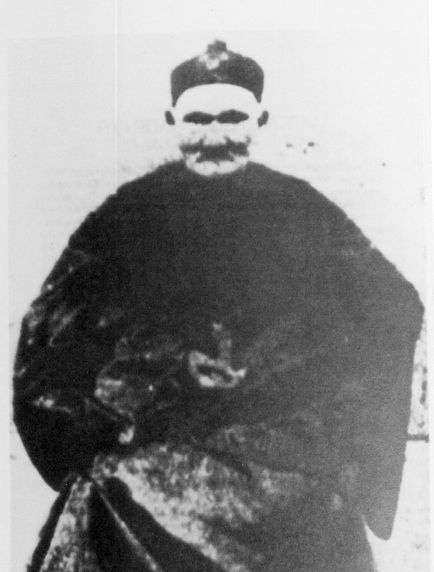
Li Ching-Yuen, Died Aged 256 (or 197)

So, what did you do with you life?

Oh, for the first 100 years I lived in the mountains and traded herbs. Then I joined the army to teach martial arts.

His secrets:

Tranquil mind
Sit like a tortoise
Walk sprightly like a pigeon
Sleep like a dog
Qigong
Gotu Kola

Born in 1677 or 1736, died in 1933!

From wiki:

Some claim that Li Ching-Yuen was born in 1677 in Qi Jiang Xian, Szechuan province. By his own account, he was born in 1736. However, in 1930, Professor Wu Chung-chieh of the University of Chengdu discovered Imperial Chinese government records from 1827, congratulating one Li Ching-Yuen on his 150th birthday, and further documents later congratulating him on his 200th birthday in 1877. In 1928, a New York Times correspondent wrote that many of the old men in Li’s neighborhood asserted that their grandfathers knew him when they were boys, and that he at that time was a grown man.

He began gathering herbs in the mountain ranges at the age of ten, and also began learning of longevity methods, surviving on a diet of herbs and rice wine. He lived this way for the first 100 years of his life. In 1749, he moved to Kai Xian to join the Chinese army as a teacher of the martial arts and as a tactical advisor.

One of his disciples, the Taiji Quan Master Da Liu told of Master Li’s story: at 130 years old Master Li encountered an older hermit, over 500 years old, in the mountains who taught him Baguazhang and a set of Qigong with breathing instructions, movements training coordinated with specific sounds, and dietary recommendations. Da Liu reports that his master said that his longevity “is due to the fact that I performed the exercises every day – regularly, correctly, and with sincerity – for 120 years.”

In 1927, Li Ching Yuen was invited by General Yang Sen to visit him in Wan Xian, Szechuan. The general was fascinated by his youthfulness, strength and prowess in spite of his advanced age. His famous portrait was photographed there. Returning home, he died a year later, some say of natural causes; others claim that he told friends that “I have done all I have to do in this world. I will now go home.”

After Li’s death, General Yang Sen investigated the truth about his claimed background and age. He wrote a report that was later published. In 1933, people interviewed from his home province remembered seeing him when they were children, and that he hadn’t aged much during their lifetime. Others reported that he had been friends with their grandfathers.

Li’s obituary was printed in The New York Times, Time Magazine, and other publications. The Time magazine article stated that in 1930 Professor Wu Chung-chieh, from Chengdu University, found records from the Chinese Imperial Government congratulating Li Ching Yuen in his 150th birthday in 1827.

He worked as an herbalist, promoting the use of wild reishi, goji berry, wild ginseng, he shou wu and gotu kola along with other Chinese herbs. Li had also supposedly produced over 200 descendants during his life span, surviving 23 wives.

Meditation/stress/ageing

So how could focusing on your thoughts have such impressive physical effects? The assumption that meditation simply induces a state of relaxation is “dead wrong”, says Raison. Brain-imaging studies suggest that it triggers active processes within the brain, and can cause physical changes to the structure of regions involved in learning, memory, emotion regulation and cognitive processing.

The question of how the immaterial mind affects the material body remains a thorny philosophical problem, but on a practical level, “our understanding of the brain-body dialogue has made jaw-dropping advances in the last decade or two,” says Raison. One of the most dramatic links between the mind and health is the physiological pathways that have evolved to respond to stress, and these can explain much about how meditation works.

When the brain detects a threat in our environment, it sends signals to spur the body into action. One example is the “fight or flight” response of the nervous system. When you sense danger, your heart beats faster, you breathe more rapidly, and your pupils dilate. Digestion slows, and fat and glucose are released into the bloodstream to fuel your next move. Another stress response pathway triggers a branch of the immune system known as the inflammatory response.

These responses might help us to run from a mammoth or fight off infection, but they also damage body tissues. In the past, the trade-off for short bursts of stress would have been worthwhile. But in the modern world, these ancient pathways are continually triggered by long-term threats for which they aren’t any use, such as debt, work pressures or low social status. “Psychological stress activates these pathways in exactly the same way that infection does,” says Raison.

via How Meditation Might Ward Off the Effects of Ageing — Science of the Spirit — Sott.net.

Your Body

300 joints.
700 major muscles.
Unknown amount of minor and link muscles.
A nervous system stretching from London to Bombay.
62,000 miles of arteries, veins and capillaries.
Lungs the size of a tennis court.
A heat pumping 5 litres of blood every minute.

What Good Shall I Do This Day? – Benjamin Franklin’s Daily Schedule

Early to rise, two hour lunch break, and sleep by ten. Now that’s what I’m talking about.

“Early to bed and early to rise makes a man healthy, wealthy, and wise.”

“Content makes poor men rich; discontentment makes rich men poor.”

“Those who would give up essential liberty to purchase a little temporary safety deserve neither liberty nor safety.”