Pollution and Overfishing Spell Trouble for Dolphins Worldwide

The International Union for the Conservation of Nature’s Red List of at-risk wildlife species considers 36 of the world’s 40 dolphin species to be in trouble

Dolphins are probably the most iconic and best loved species of the marine world. Their playful nature and high intelligence have endeared them to people for eons. But our love of dolphins might not be enough to save them from extinction brought on by overfishing, pollution, climate change and other environmental affronts perpetrated by humans.

The nonprofit International Union for the Conservation of Nature (IUCN), which maintains a worldwide “Red List” of at-risk wildlife species, considers 36 of the world’s 40 different dolphin species to be in trouble. Yes, specific events can cause problems for dolphins—researchers believe that the deaths of 300 dolphins in the Gulf of Mexico over the last year can be blamed on the BP oil spill there. But more widespread and constant forms of pollution—such as run-off of agricultural and industrial chemicals into rivers that drain into coastal areas of the ocean where dolphins spend much of their time—are having a more lasting negative effect on dolphins by poisoning them and causing reproductive problems.

Also, dolphins have long been the unwitting victims of fishermen targeting large prey, such as tuna. According to Defenders of Wildlife, fishermen started to notice a half century ago that schools of yellow fin tuna seemed to follow dolphins that swim higher in the water column, especially in the Eastern Tropical Pacific. “Fishermen there have consequently found that setting nets on dolphins to catch the tuna swimming underneath is a lucrative technique for tuna fishing, despite the fact that the practice is extremely injurious to dolphins,” reports the group, adding that some seven million dolphins have since been killed as a result of the practice.

Also, our unrelenting demand for seafood—which has caused rampant overfishing throughout the world’s oceans—means that dolphins, which feed on smaller fish such as mackerel, cod and herring as well as squid, are having a harder and harder time finding food. And in Turkey, Peru, Sri Lanka, Japan and elsewhere, dolphins are hunted as a delicacy and also to decrease competition for fish resources.

via Flipped Off: Pollution and Overfishing Spell Trouble for Dolphins Worldwide: Scientific American.
Fukushima nuclear plant is leaking like a sieve

As more details leak out about the stricken Fukushima Daiichi nuclear power plant, it’s become clear that something else is leaking—radioactive water from the cores of three damaged reactors.

Leaks have been a persistent problem at the plant since it was struck by an earthquake and tsunami on 11 March. Three reactors operating at the time of the quake went into meltdown after the tsunami wiped out emergency generators designed to circulate water through the cores. TEPCO recently admitted that all three units probably suffered complete meltdowns before workers could flood them with seawater.

Since then, reactor operators have kept water flowing to the cores and several fuel storage pools above the reactors. That same water appears to be flowing out into the basements of buildings and eventually the Pacific Ocean, where environmentalists and scientists have raised concerns about possible contamination.

The Tokyo Electric Power Company (TEPCO), which runs the plant, hoped to rectify the problem by pumping water into storage tanks until it can be reprocessed, but today Reuters reports that the storage tanks appear to be leaking.

And that’s just the start of the bad news because the reactors themselves appear to be leaking as well. TEPCO initially hoped that the leaks were largely coming from pipes that could be repaired, but they now concede that both the reactors’ pressure vessels and primary containment vessels, which are designed to contain an accident, are probably leaking water.

via Nature News Blog: Fukushima nuclear plant is leaking like a sieve.

More radioactive water leaks into sea near stricken plant

A major new leak of highly radioactive water into the ocean near the Fukushima No. 1 nuclear power plant was discovered May 11.

Local authorities and the embassies of the United States and other countries, including neighboring nations, were notified of the latest setback at the stricken plant, which has been out of control since the March 11 Great East Japan Earthquake.

The plant’s operator, Tokyo Electric Power Co., said cesium-134 at levels about 18,000 times above government standards for wastewater discharge into the ocean was detected in the sea near the No. 3 reactor.

Workers discovered highly radioactive water in a pit connected to a trench of the No. 3 reactor around 10:30 a.m. May 11.

The water leaked into the sea through cracks on the side of the pit facing the ocean.

TEPCO stopped the leak at 6:45 p.m. by plugging the crack with concrete.

Checks on seawater outside a silt fence installed by TEPCO last month at an intake of the No. 3 reactor to stop contamination from spreading out to sea found 96 becquerels of iodine-131 per cubic centimeter, 2,400 times above safety standards, according to the utility. The silt fence is a plastic curtain hanging from floats and reaching near the sea bottom.

Inside the pit, the iodine-131 level was 3,400 becquerels per cubic centimeter, 85,000 times the permissible level.

Cesium-134 was measured at 37,000 becquerels per cubic centimeter, 620,000 times the safety limit.

TEPCO said the contaminated water was believed to be from the basement of the turbine building of the No. 3 reactor, where highly radioactive water was discovered earlier.

It is the first major leak of highly contaminated water into the sea since a leak near the No. 2 reactor last month.

via asahi.com(朝日新聞社):More radioactive water leaks into sea near stricken plant – English.

TEPCO drowning in dealing with tons of radioactive water

As if Tokyo Electric Power Co., the embattled operator of the crippled Fukushima No. 1 nuclear power plant, didn’t have enough problems, another daunting task is what to do with an estimated 90,000 tons of radioactive water.

This vast amount remains from the pumping of water to cool reactors after the plant’s regular cooling systems were disabled in the March 11 Great East Japan Earthquake and seawater from the tsunami.

The problem is growing by the day, as the volume of contaminated water keeps increasing.

TEPCO needs to treat and recycle contaminated water escaping from the facilities to maintain the cooling of the reactors without increasing the volume of contaminated water.

It signed a deal with France’s Areva SA, a nuclear engineering company, to start treating the radioactive water in June. But Areva’s equipment is capable of treating only 1,200 tons a day, and it is not clear if it can handle a total of 90,000 tons.

In dealing with this volume of contaminated water, the plant’s No. 2 reactor presents the most serious challenge of its four stricken reactors.

Workers discovered on April 2 that highly radioactive water gushed into the sea through cracks close to a pit near an intake of the No. 2 reactor. Technicians spent a total of 93 hours before successfully plugging the leaks on April 6.

The contaminated water came from buildings housing the No. 2 reactor and turbine as well as a trench.

TEPCO is transferring the contaminated water to a disposal-and-treatment facility in the compound to prevent further overflow.

The total amount of contaminated water at the No. 2 reactor was estimated at 25,000 tons before the transfer work got under way, equivalent to about 400,000 terabecquerels of radioactivity.

via asahi.com(朝日新聞社):TEPCO drowning in dealing with tons of radioactive water – English.

Osama bin Laden’s Nose and Ears

From an article comparing the real bin Laden’s nose and ears with the man shown in the recent videos:

It’s pretty astounding that the CIA would be so cavalier as to release videos that can so easily be proven to feature someone other than the real Osama bin Laden. Then again, perhaps this is indicative of the contempt with which the CIA and US government consider the general US, and to a lesser extent world, public. I think we can safely assume that the US government and all of those behind the phony ‘war on terrorism’ (which is clearly a global war of imperial conquest) and the 9/11 attacks believe that there is little if anything that the public will not accept as long as it comes from official sources. So far, the public has done nothing to suggest that this belief is ill-founded.

In short, and once again, you are being sold a monstrous lie. And you can have no doubt that believing lies always carries consequences for the believers. The seriousness of the consequences depends on the seriousness of the lie. Given that the lie that is the official narrative of the ‘war on terror’ implicates the believers in the murder of 1.5 million Iraqi and Afghan citizens, 3,000US citizens, the torture of thousands of innocent people and the destruction of civil liberties the world over, they may want to reconsider their position.

via Exclusive: Osama bin Laden’s Nose and Left Ear — Puppet Masters — Sott.net.

Reconstructing the ‘Death of Osama bin Laden’

You didn’t believe the military/governement about WMDs, so why believe them now?

All of the available evidence strongly suggests that Bin Laden died many years ago. Nevertheless, the war-mongers and ‘reality creators’ in the US of A and elsewhere decided that he was just too damn perfect as an terrorist mastermind think baddie in James Bond to let him or us off the hook so easily. So, they used his image and attributed the 9/11 attacks and a host of other ‘terrorist’ crimes since then to him without any evidence. But the fact that he was, in reality, quite dead, was an issue that the backroom boys in the Pentagon and the CIA were always going to have to face one day. And in case you’re wondering, the idea of allowing him to simply fade from public awareness was a non-starter, not due to any considerations of honor or justice, but rather because of the massive ‘political capital’ that his capture or killing would provide.So at some stage in the recent past, a plot was hatched in the bowels of the Pentagon and CIA HQ to stage the death of Bin Laden. Word has it that the real codename for this operation was either ‘die another day’ or ‘you only live twice’. but don’t quote me on that.Joking aside, we will probably never know the full details, but using the available data, past and present, we can build up a picture of the most likely circumstances surrounding the ‘death of Bin Laden’.Only very few people with high-level Pentagon and CIA security clearances would have been aware of the full facts of the plan. As far as people like Obama and his team and the Navy SEALs who would actually carry out the mission were concerned, the real Osama really had been found in a ‘compound’ in Pakistan.This particular compound was in fact a Pakistani intelligence/CIA safe house containing former Islamic militants and families who had been captured and ‘turned’ by the ISI and the CIA and who were being used as informers.

via Reconstructing the ‘Death of Osama bin Laden’ | JoeQuinn.net.

Did Osama win the war on terror?

Did Osama bin Laden win? No. Did he succeed? Well, America is still standing, and he isn’t. So why, when I called Daveed Gartenstein-Ross, a counterterrorism expert who specializes in al-Qaeda, did he tell me that “bin Laden has been enormously successful”? There’s no caliphate. There’s no sweeping sharia law. Didn’t we win this one in a clean knockout?

Apparently not. Bin Laden, according to Gartenstein-Ross, had a strategy that we never bothered to understand, and thus that we never bothered to defend against. What he really wanted to do — and, more to the point, what he thought he could do — was bankrupt the United States of America. After all, he’d done the bankrupt-a-superpower thing before. And though it didn’t quite work out this time, it worked a lot better than most of us, in this exultant moment, are willing to admit.

Bin Laden’s transition from scion of a wealthy family to terrorist mastermind came in the 1980s, when the Soviet Union was trying to conquer Afghanistan. Bin Laden was part of the resistance, and the resistance was successful — not only in repelling the Soviet invasion, but in contributing to the communist super-state’s collapse a few years later. “We, alongside the mujaheddin, bled Russia for 10 years, until it went bankrupt,” he later explained.

The campaign taught bin Laden a lot. For one thing, superpowers fall because their economies crumble, not because they’re beaten on the battlefield. For another, superpowers are so allergic to losing that they’ll bankrupt themselves trying to conquer a mass of rocks and sand. This was bin Laden’s plan for the United States, too.

via Bin Laden’s war against the U.S. economy – Ezra Klein – The Washington Post.

It’s sad bad news about the fish

More than 40 species of marine fish currently found in the Mediterranean could disappear in the next few years. According to a study for the IUCN Red List of Threatened Species™ on the status of marine fish in the Mediterranean Sea, almost half of the species of sharks and rays (cartilaginous fish) and at least 12 species of bony fish are threatened with extinction due to overfishing, marine habitat degradation and pollution.

Commercial species like Bluefin Tuna (Thunnus thynnus), Dusky Grouper (Epinephelus marginatus), Sea Bass (Dicentrarchus labrax) or Hake (Merluccius merluccius) are considered threatened or Near Threatened with extinction at the regional level mainly due to overfishing.

“The Mediterranean and Eastern Atlantic population of the Atlantic Bluefin Tuna (Thunnus thynnus) is of particular concern. There has been an estimated 50% decline in this species’ reproduction potential over the past 40 years due to intensive overfishing,” says Kent Carpenter, IUCN Global Marine Species Assessment Coordinator. “The lack of compliance with current quotas combined with widespread underreporting of the catch may have undermined conservation efforts for this species in the Mediterranean.”

The use of fishing gear, such as fishing lines, gill or trawling nets, and the illegal use of driftnets means that hundreds of marine animals with no commercial value are captured, threatening populations of many species of sharks, rays and other fish, as well as other marine animals including dolphins, whales, turtles and birds.

“The use of trawling nets is one of the main problems for conservation and sustainability of many marine species,” says Maria del Mar Otero, IUCN-Med Marine Programme Officer. “Because it is not a selective technique, it captures not only the target fish but also a high number of other species while also destroying the sea bottom, where many fish live, reproduce and feed.”

via IUCN – Home.

Legal Murder

U.S.-led wars in Iraq and Afghanistan have been causing huge civilian casualties with 63 percent of some 109,000 people killed in the Iraq war being civilians, according to a report on the U.S. human rights record released on Sunday.The figures were quoted from a WikiLeaks trove by the Human Rights Record of the United States in 2010, which was released by the Information Office of China’s State Council in response to the country reports on Human Rights Practices for 2010 issued by the U.S. Department of State.Figures from the WikiLeaks website also revealed up to 285,000 war casualties in Iraq from March 2003 through the end of 2009, according to the report.”The U.S. military actions in Afghanistan and other regions have also brought tremendous casualties to local people,” said the report.The report cited the notorious case on a “kill team” formed by five soldiers from the 5th Stryker Combat Brigade, 2nd Infantry Division of the U.S. forces in Afghanistan. The team had committed at least three murders, where they randomly targeted and killed Afghan civilians, and dismembered the corpses and hoarded the human bones.In addition, the U.S.-led North Atlantic Treaty Organization troops had caused 535 Afghan civilian deaths and injuries in 2009. Among them 113 civilians were shot and killed, an increase of 43 percent over 2008, the report quoted McClatchy Newspapers as saying.

via 63 percent of people killed in Iraq war were civilians: report.

Corrupt America

I am totally flabbergasted by the level of corruption and debt in America. The country is messed up beyond repair, I feel.

“Most Americans know about that budget. What they don’t know is that there is another budget of roughly equal heft, traditionally maintained in complete secrecy. After the financial crash of 2008, it grew to monstrous dimensions, as the government attempted to unfreeze the credit markets by handing out trillions to banks and hedge funds. And thanks to a whole galaxy of obscure, acronym-laden bailout programs, it eventually rivaled the “official” budget in size — a huge roaring river of cash flowing out of the Federal Reserve to destinations neither chosen by the president nor reviewed by Congress, but instead handed out by fiat by unelected Fed officials using a seemingly nonsensical and apparently unknowable methodology.”

During the financial crisis, the Fed routinely made billions of dollars in “emergency” loans to big banks at near-zero interest. Many of the banks then turned around and used the money to buy Treasury bonds at higher interest rates — essentially loaning the money back to the government at an inflated rate. “People talk about how these were loans that were paid back,” says a congressional aide who has studied the transactions. “But when the state is lending money at zero percent and the banks are turning around and lending that money back to the state at three percent, how is that different from just handing rich people money?”

Those kinds of deals were the essence of the bailout — and the vast mountains of near-zero government cash turned companies facing bankruptcy into monstrous profit machines. In 2008 and 2009, while Christy Mack was busy getting her little TALF loans for $220 million, her husband’s bank hauled in $2 trillion in emergency Fed loans. During the same period, Goldman borrowed nearly $800 billion. Shortly afterward, the two banks reported a combined annual profit of $14.5 billion.

from Rolling Stone

Warning stones up to 600 years old were ignored by Japanese

“Remember the calamity of the great tsunamis. Do not build any homes below this point.” Screw that, let’s put the power station down there.

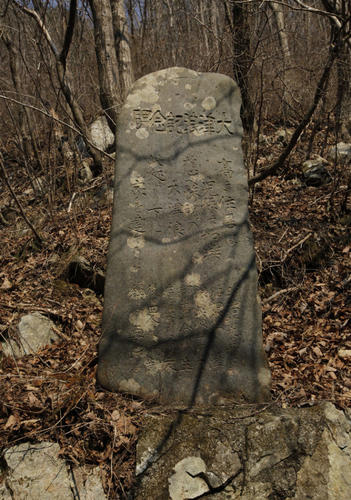
MIYAKO, Japan (AP) — Modern sea walls failed to protect coastal towns from Japan’s destructive tsunami last month. But in the hamlet of Aneyoshi, a single centuries-old tablet saved the day.

“High dwellings are the peace and harmony of our descendants,” the stone slab reads. “Remember the calamity of the great tsunamis. Do not build any homes below this point.”

It was advice the dozen or so households of Aneyoshi heeded, and their homes emerged unscathed from a disaster that flattened low-lying communities elsewhere and killed thousands along Japan’s northeastern shore.

Hundreds of such markers dot the coastline, some more than 600 years old. Collectively they form a crude warning system for Japan, whose long coasts along major fault lines have made it a repeated target of earthquakes and tsunamis over the centuries.

via The Associated Press: Tsunami-hit towns forgot warnings from ancestors.

Scientists unsure why dolphins washing up dead

My guess is the millions of barrels of toxic dispersant they used to disappear the oil.

Dead baby bottlenose dolphins are continuing to wash up in record numbers on the shores of the Gulf of Mexico, and scientists do not know why.

Since February 2010 to April 2011, 406 dolphins were found either stranded or reported dead offshore.

The occurrence has prompted the National Oceanic and Atmospheric Administration to designate these deaths as an “unusual mortality event” or UME. The agency defines a UME as a stranding incident that is unexpected or involves a significant loss of any marine mammal population.

“This is quite a complex event and requires a lot of analysis,” said Blair Mase, the agency’s marine mammal investigations coordinator.

Mase said NOAA is working closely with a variety of agencies to try to figure out not only why the bottlenose dolphins are turning up in such large quantities but also why the mammals are so young.

“These were mostly very young dolphins, either pre-term, neonatal or very young and less than 115 centimeters,” she said.

Marine mammals are particularly susceptible to harmful algal blooms, infectious diseases, temperature and environmental changes, and human impact.

“The Gulf of Mexico is no stranger to unusual mortality events,” Mase said.

Sensitivity surrounding marine life in the area is particularly high after the BP oil disaster that sent millions of barrels of crude into the Gulf of Mexico nearly a year ago.

via Scientists unsure why dolphins washing up dead – CNN.com.

Japan Quake and Tsunami – Inside the Evacuation Zone – Video

This compelling video was filmed last Sunday. Two Japanese tourists head into the 20km no-man’s-land of the evacuation zone. Radiation meters beeping like crazy, they proceed to as far as 1.5 km from the Fukushima nuclear plant. On the way encountering ghost towns, deserted apart from roaming cattle, and, sadly, the pet dogs left behind when the humans fled.

An economy like America’s is not likely to do well in the long haul

1% or Americans get nearly 25% of the income and own 40% of the wealth

Some people look at income inequality and shrug their shoulders. So what if this person gains and that person loses? What matters, they argue, is not how the pie is divided but the size of the pie. That argument is fundamentally wrong. An economy in which most citizens are doing worse year after year—an economy like America’s—is not likely to do well over the long haul. There are several reasons for this.

First, growing inequality is the flip side of something else: shrinking opportunity. Whenever we diminish equality of opportunity, it means that we are not using some of our most valuable assets—our people—in the most productive way possible. Second, many of the distortions that lead to inequality—such as those associated with monopoly power and preferential tax treatment for special interests—undermine the efficiency of the economy. This new inequality goes on to create new distortions, undermining efficiency even further. To give just one example, far too many of our most talented young people, seeing the astronomical rewards, have gone into finance rather than into fields that would lead to a more productive and healthy economy.

Third, and perhaps most important, a modern economy requires “collective action”—it needs government to invest in infrastructure, education, and technology. The United States and the world have benefited greatly from government-sponsored research that led to the Internet, to advances in public health, and so on. But America has long suffered from an under-investment in infrastructure (look at the condition of our highways and bridges, our railroads and airports), in basic research, and in education at all levels. Further cutbacks in these areas lie ahead.

via Of the 1%, by the 1%, for the 1% | Society | Vanity Fair.

Gulf Spill Syndrome

The trouble with the news is that it keeps on coming. What about the old news we’ve forgotten about?


BP’s oil disaster last summer gushed at least 4.9 million barrels of oil into the Gulf of Mexico, causing the largest accidental marine oil spill in history – and the largest environmental disaster in US history. Compounding the problem, BP has admitted to using at least 1.9 million gallons toxic dispersants, including one chemical that has been banned in the UK.

According to chemist Bob Naman, these chemicals create an even more toxic substance when mixed with crude oil. Naman, who works at the Analytical Chemical Testing Lab in Mobile, Alabama, has been carrying out studies to search for the chemical markers of the dispersants BP used to both sink and break up its oil.

Poly-aromatic hydrocarbons (PAHs) from this toxic mix are making people sick, Naman said. PAHs contain compounds that have been identified as carcinogenic, mutagenic, and teratogenic.

“The dispersants are being added to the water and are causing chemical compounds to become water soluble, which is then given off into the air, so it is coming down as rain, in addition to being in the water and beaches of these areas of the Gulf,” Naman told Al Jazeera.

“I’m scared of what I’m finding. These cyclic compounds intermingle with the Corexit [dispersants] and generate other cyclic compounds that aren’t good. Many have double bonds, and many are on the EPA’s danger list. This is an unprecedented environmental catastrophe.”

Click for more coverage of the BP Oil Spill, including the other segments of the 8-part series, Fatal Fallout.

Aguinaga’s health has been in dramatic decline.

“I have terrible chest pain, at times I can’t seem to get enough oxygen, and I’m constantly tired with pains all over my body,” Aguinaga explained, “At times I’m pissing blood, vomiting dark brown stuff, and every pore of my body is dispensing water.”

via Gulf spill sickness wrecking lives – Features – Al Jazeera English.

“Patriotism is a disease” – Einstein, quoted by Peter Joseph of Zeitgeist

Peter Joseph, of the Zeitgeist Movement talks a lot of sense. Here’s a short interview with him in which he outlines the basic principles:

Come back to the basic necessities of life
The current economic system is intrinsically flawed
Almost everyone suffers under this system
Eliminate war, famine, most crime, all monetarily related
Think globally, not nationally
Self interest becomes social interest
Invent not for money but for a better world
Undo psychological distortions

Good stuff and not just wishful idealism, nor communism. I find he comes across better in this interview than in the lengthy movies:

Deaths Of 20,000 Japanese Afford Planet Solid 15 Minutes In Which Everyone Acts Like A Human Being

EARTH—Following the recent earthquake and tsunami that tragically took the lives of an estimated 20,000 Japanese citizens, the planet Earth was afforded a good 15 minutes during which its inhabitants behaved like actual human beings, sources reported.

In the quarter-hour that followed news of the massive natural disaster obliterating entire towns and killing or injuring thousands of innocent men, women, and children, social scientists around the globe reported rare—and in many cases unprecedented—occurrences of individuals feeling genuine empathy for their fellow humans, recognizing the evanescence of life, and experiencing a deep sense of awe and humility toward the overwhelming power of nature.

After the 900 seconds had passed, however, this behavior reportedly ceased.

“Though its duration was incredibly brief, in this span of time the entire human race was able to temporarily forget all its petty political interests, narcissism, greed, and ironic detachment for a few moments and behave like real people with compassion and respect,” social scientist Dr. Robert Westbrook said of the short-lived burst of basic decency. “There is no evidence of any significant bickering, lying, preening, or self-involvement during this period. In fact, it appears that all 6.7 billion human beings simply stopped for one quarter of an hour, became filled with genuine emotion, and said, ‘Oh, no, those poor people,’ while keeping their baser instincts in check.”

“That they instantly went back to being needy, solipsistic whiners does not change the fact that, for a fleeting moment, the world was a wholly humane and gentle place,” Westbrook added.

According to experts, immediately after the 15 minutes were over, the vast majority of the Earth’s people seemed to move on from the harrowing, incomprehensibly tragic event, and have spent the subsequent time attempting to get ahead in their careers, ignoring the plight of those desperately in need, thinking solely of themselves, and acting how they generally act at all times throughout their lives.

A sizable number of human beings around the planet were reportedly able to negate the sympathy and goodwill they had just exhibited toward Japan by moments later getting into an uninformed argument about the efficacy of nuclear power, making a crude Godzilla-related joke on their Twitter or Facebook page, or telling themselves they didn’t even know these people so it wasn’t really worth getting too upset about.

via Deaths Of 20,000 Japanese Afford Planet Solid 15 Minutes In Which Everyone Acts Like A Human Being | The Onion – America’s Finest News Source.

110317 Meltdown. Sounds nice, Is nasty

I like my power cheap and reliable, as we all do, but please could we find some way other than nuclear fission? It just seems so… vulnerable. Especially in areas where the surface of the planet is unstable. In Japan, it seems there has already been at least a partial meltdown of some sort, although information is sketchy. What is a meltdown? From PopSci:

What people mean when they say “meltdown” can refer to several different things, all likely coming after a hydrogen explosion. A “full meltdown” has a more generally accepted definition than, say, a “partial meltdown.” A full meltdown is a worst-case scenario: The zirconium alloy fuel rods and the fuel itself, along with whatever machinery is left in the nuclear core, will melt into a lava-like material known as corium. Corium is deeply nasty stuff, capable of burning right through the concrete containment vessel thanks to its prodigious heat and chemical force, and when all that supercharged nuclear matter gets together, it can actually restart the fission process, except at a totally uncontrollable rate. A breach of the containment vessel could lead to the release of all the awful radioactive junk the containment vessel was built to contain in the first place, which could lead to your basic Chernobyl-style destruction.

The problem with a full meltdown is that it’s usually the end result of a whole boatload of other chaos–explosions, fires, general destruction. Even at Chernobyl, which (unbelievably, in retrospect) had no containment building at all, the damage was caused mostly by the destruction of the plant by explosion and a graphite fire which allowed the corium to escape to the outside world, not the physical melting of the nuclear core.

Over the weekend, Chief Cabinet Secretary Yukio Edano somewhat hesitatingly confirmed a “partial” meltdown. What does that mean? Nobody knows! The New York Times notes that a “partial” meltdown doesn’t actually need to have any melting involved to qualify it as such–it could simply mean the fuel rods have been un-cooled long enough to corrode and crack, which given the hydrogen explosion, we know has already happened. But we’d advise against putting too much stock in any term relating to “meltdown”–it’ll be much more informative to find out what’s actually going on, rather than relying on a vague blanket term.

As TEPCO grapples with the damage the earthquake and tsunami did to the nuclear system, there’s going to be lots of news–there could be more explosions, mass evacuations, and more “meltdowns” of one kind or another. All we can do is learn about what’s going on, think calmly about the situation, and hope that TEPCO can eventually regain control of the plants.

Adam said that the guys who had to go into Chernobyl to literally clear up the mess were dead within a week. The man on the BBC said this cannot become as bad as Chernobyl, which is a slight relief. Corium… nasty… hope it doesn’t come to that.

Yoga at 0500
1 km swim this eve
Steps: 4921